Changgeng Zhang presents high-frequency measurements of electrical steel at 2DM 2018 in Grenoble
-
date_range 25/09/2018 infosort Conferences label2DMelectrical steel
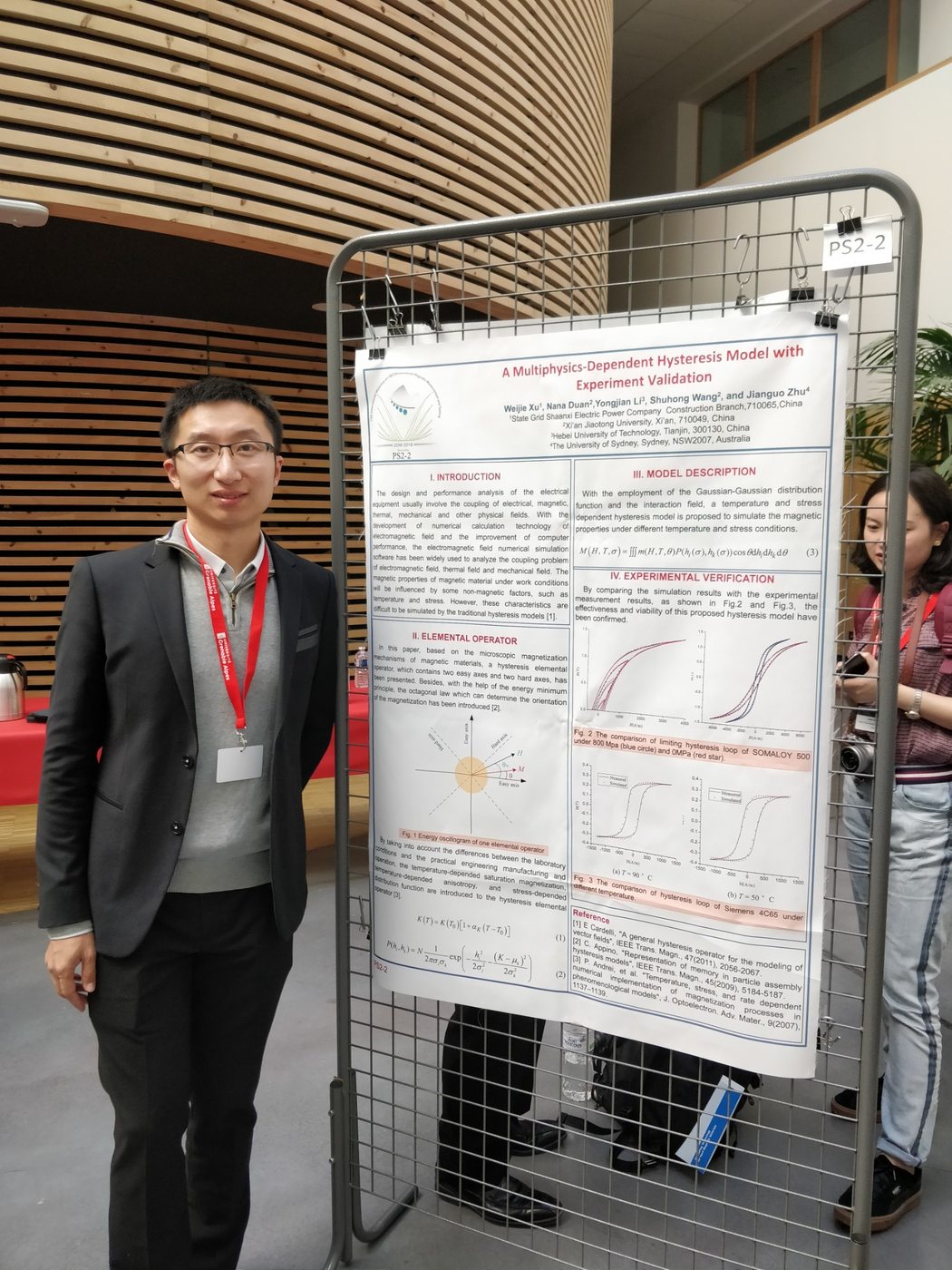
At the 15th International Workshop on One- and Two-Dimensional Magnetic Measurement and Testing (2DM), Changgeng Zhang of Hebei University of Technology presented the team’s method for measuring electrical steel under a rotating magnetic field. The workshop took place in Grenoble, France, on 24–26 September 2018. Zhang spoke at noon on 25 September in the session on two-dimensional characterisation and modelling. Programme and talk abstract
Generating a rotating field in a single sheet
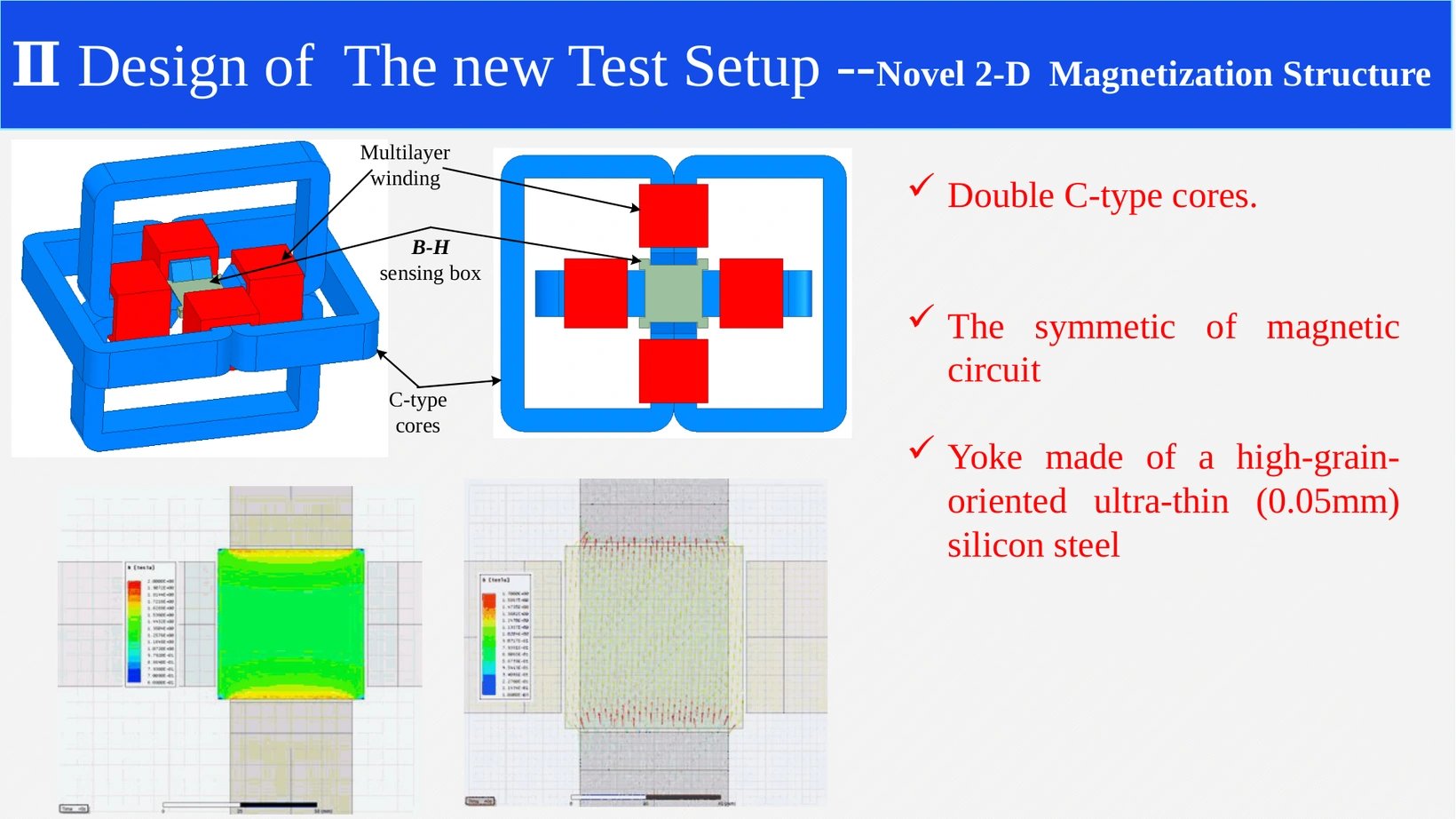
Magnetic flux alternates along a fixed direction in some parts of a motor stator and rotates in others. To reproduce both conditions in a single sheet, the team built a symmetric double-C yoke from 0.05 mm grain-oriented steel laminations. Two orthogonal sets of windings controlled the flux path in the plane of the specimen. Feedback control and harmonic compensation allowed measurements at frequencies up to 2 kHz.
Measured losses under alternating and rotating flux
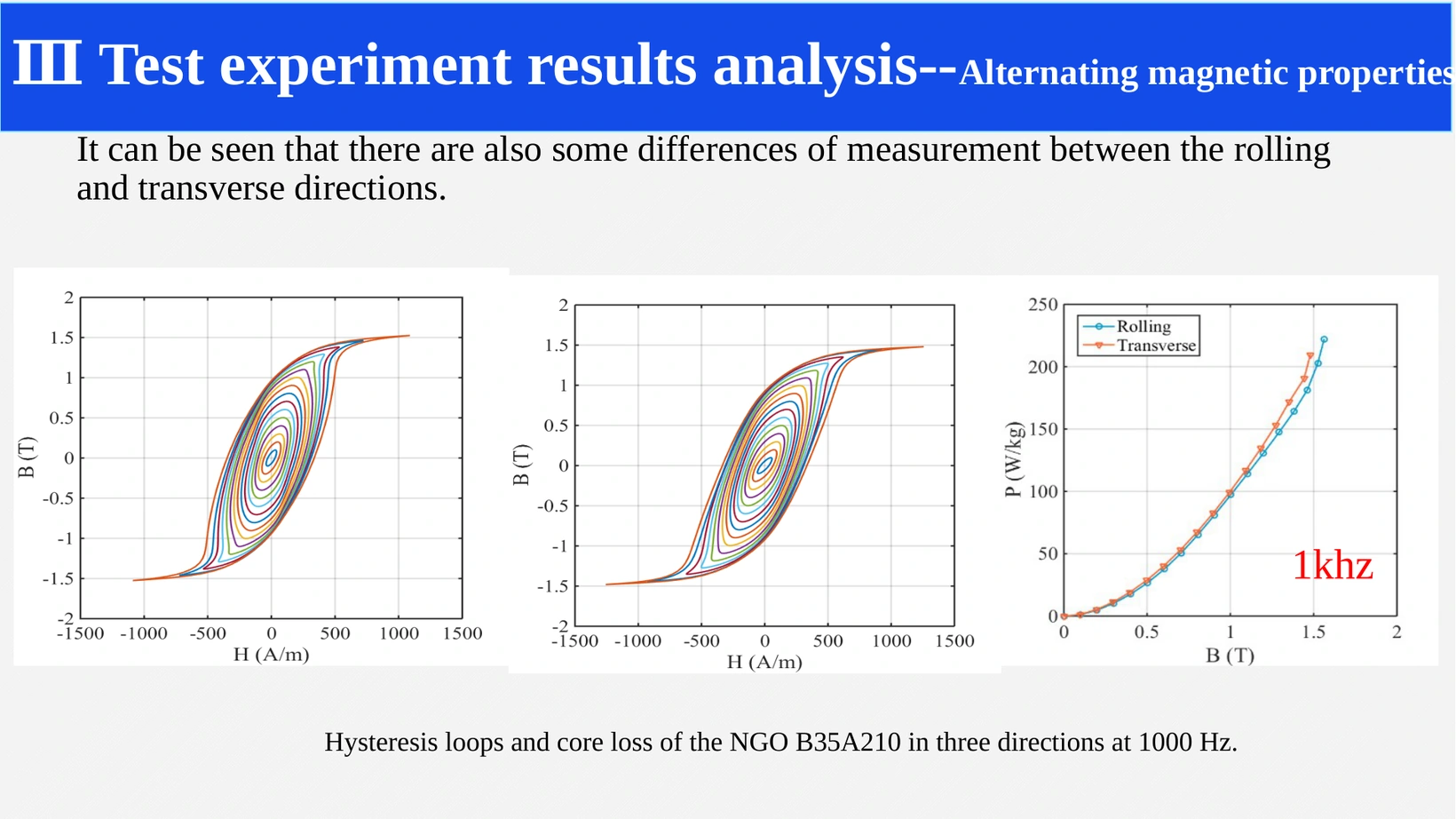
Measurements on B35A210 non-oriented electrical steel at 1 kHz revealed differences between the rolling and transverse directions in the hysteresis loops and core loss.
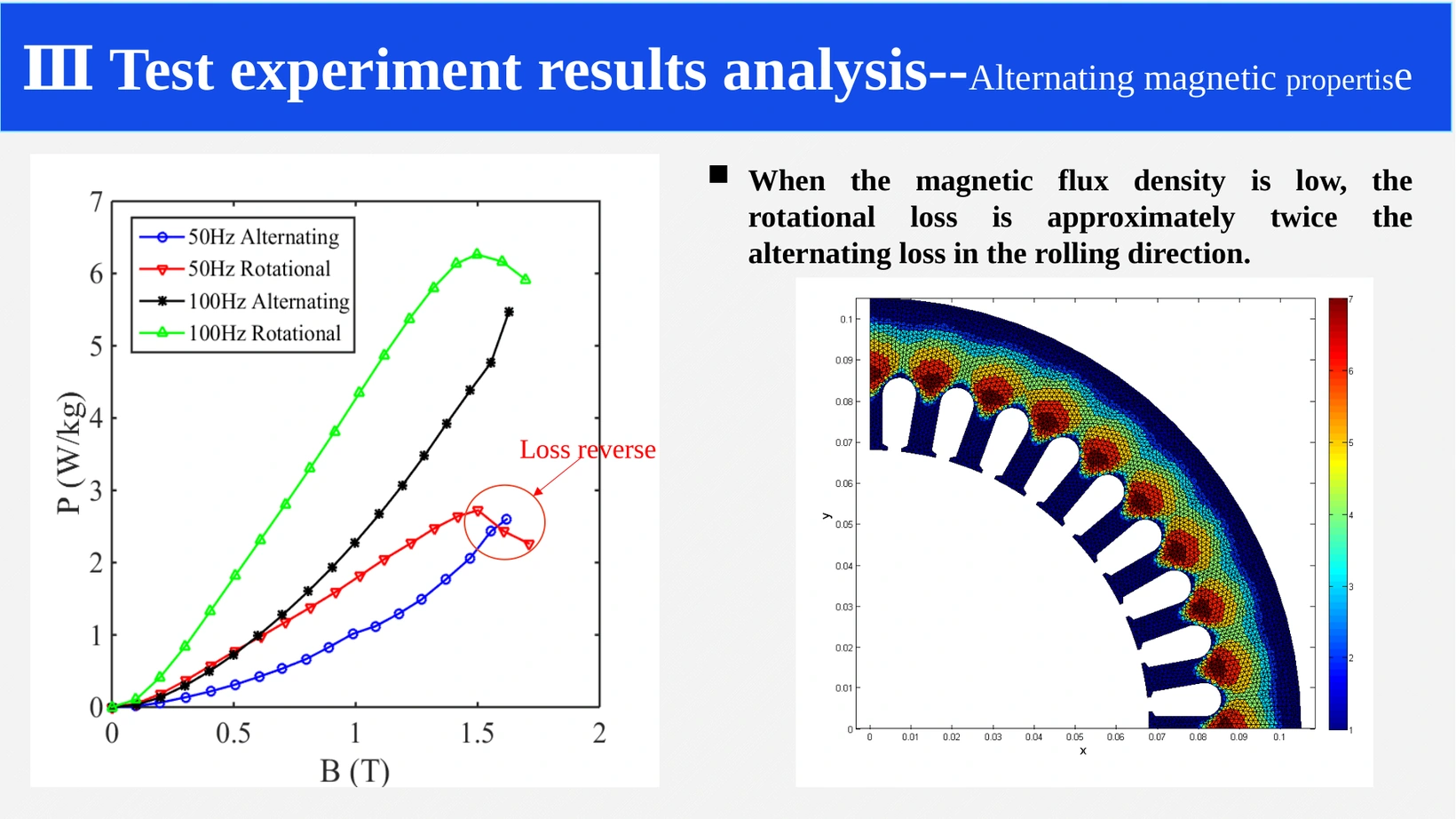
At 50 and 100 Hz, the team also compared circular magnetisation with alternating flux along the rolling direction. Rotational loss was about twice the alternating loss at low flux densities. The ratio changed as flux density rose, showing why the local flux path matters when estimating losses in a motor core.
Discussions in Grenoble
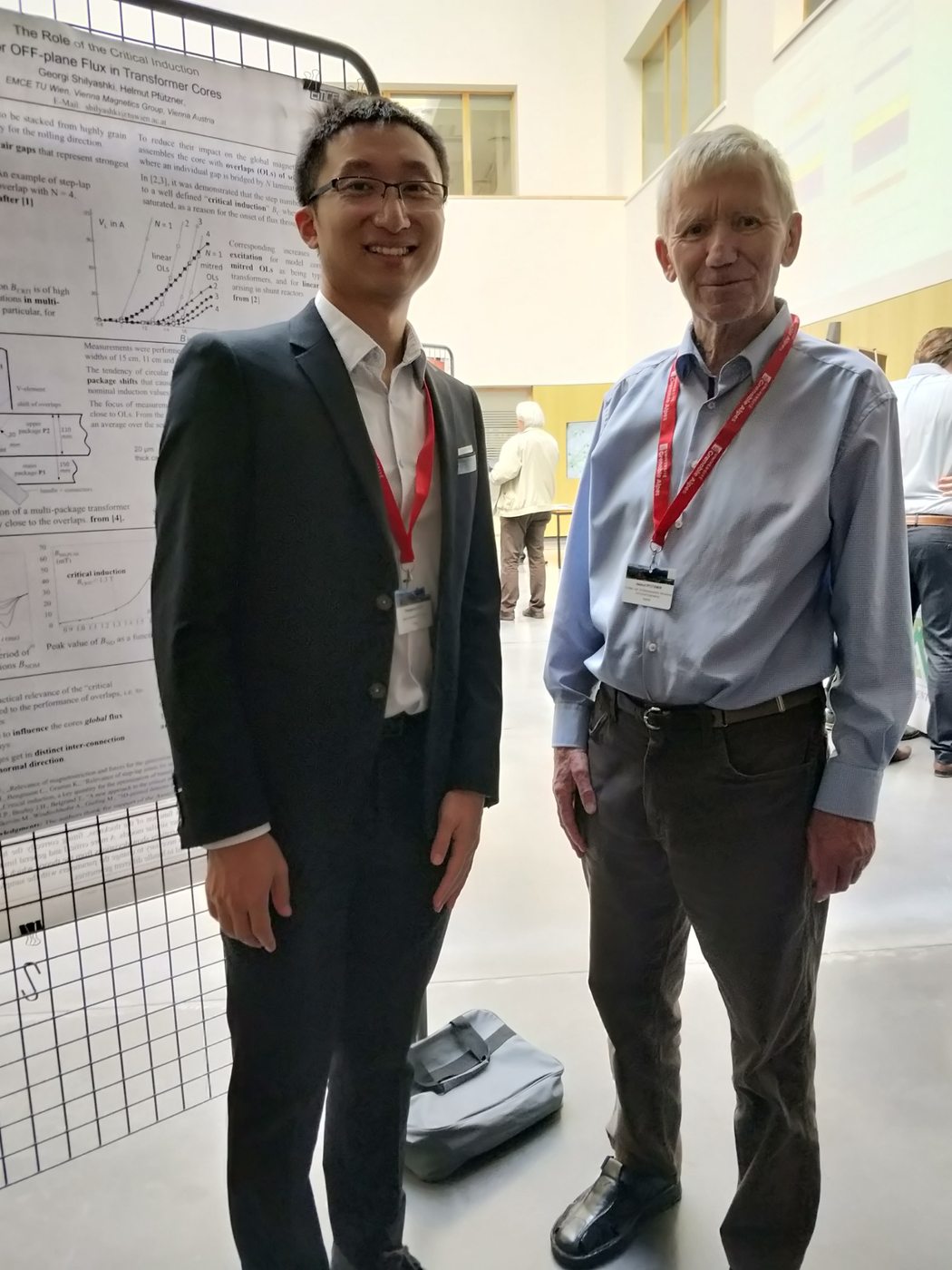
The 2DM series began in Braunschweig, Germany, in 1991 and brings academic and industrial researchers together to discuss magnetic testing and modelling. The Grenoble Electrical Engineering Laboratory organised the 2018 meeting. During the workshop, Zhang met Professor Helmut Pfützner of TU Wien, Austria, a member of its international steering committee whose research includes rotational magnetisation and core losses. Workshop website · Austrian Science Fund