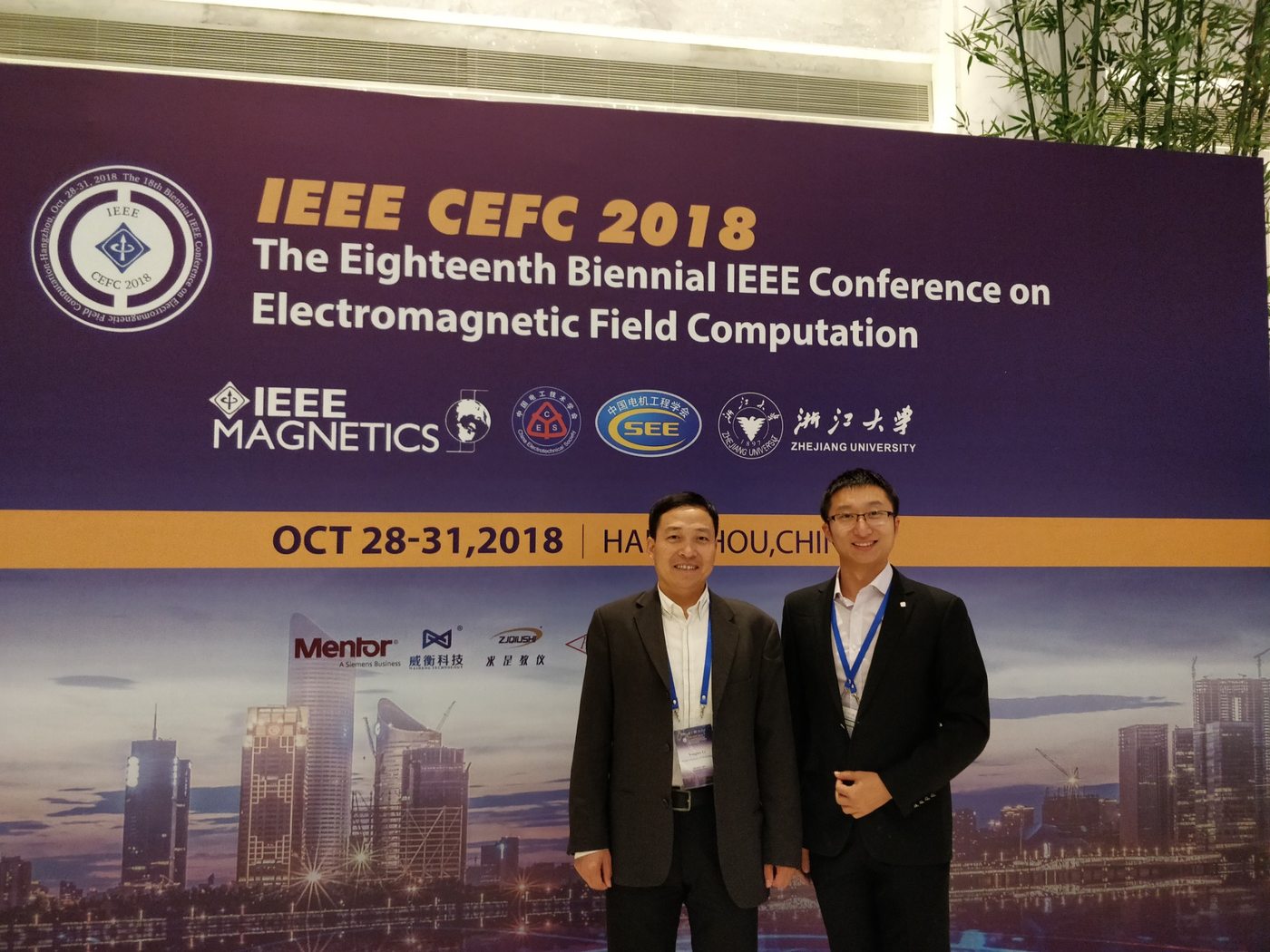
Changgeng Zhang and Xinxiao Yan present posters on motor control and core loss at IEEE CEFC 2018
-
date_range 31/10/2018 infosort Conferences labelCEFCelectric machines
Changgeng Zhang and his graduate student Xinxiao Yan of Hebei University of Technology presented two posters at the 18th Biennial IEEE Conference on Electromagnetic Field Computation (CEFC), held in Hangzhou on 28–31 October 2018. Zhang examined how a power-steering motor responds when a driver turns the wheel quickly. Yan studied where iron loss occurs in an induction motor core.
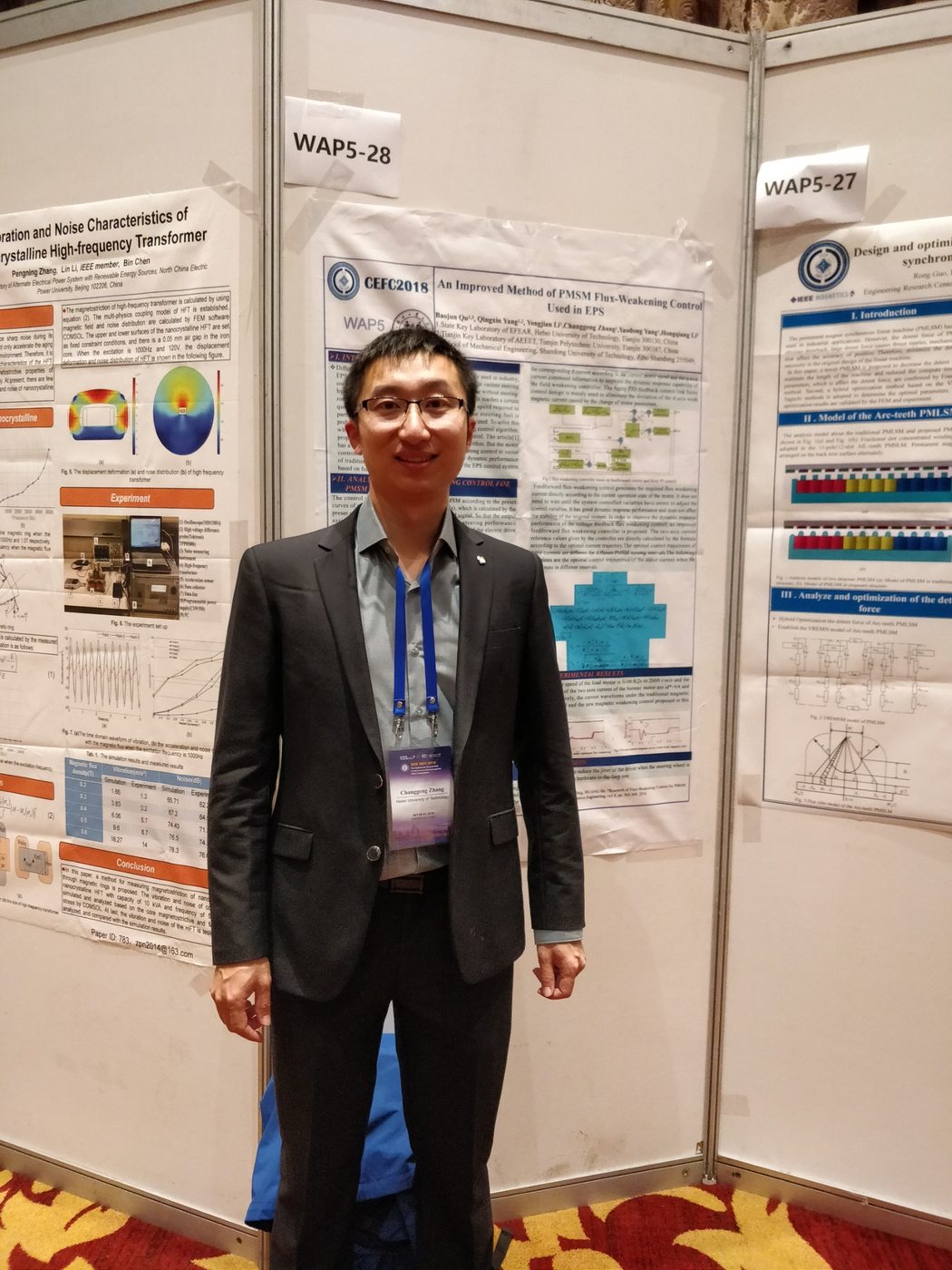
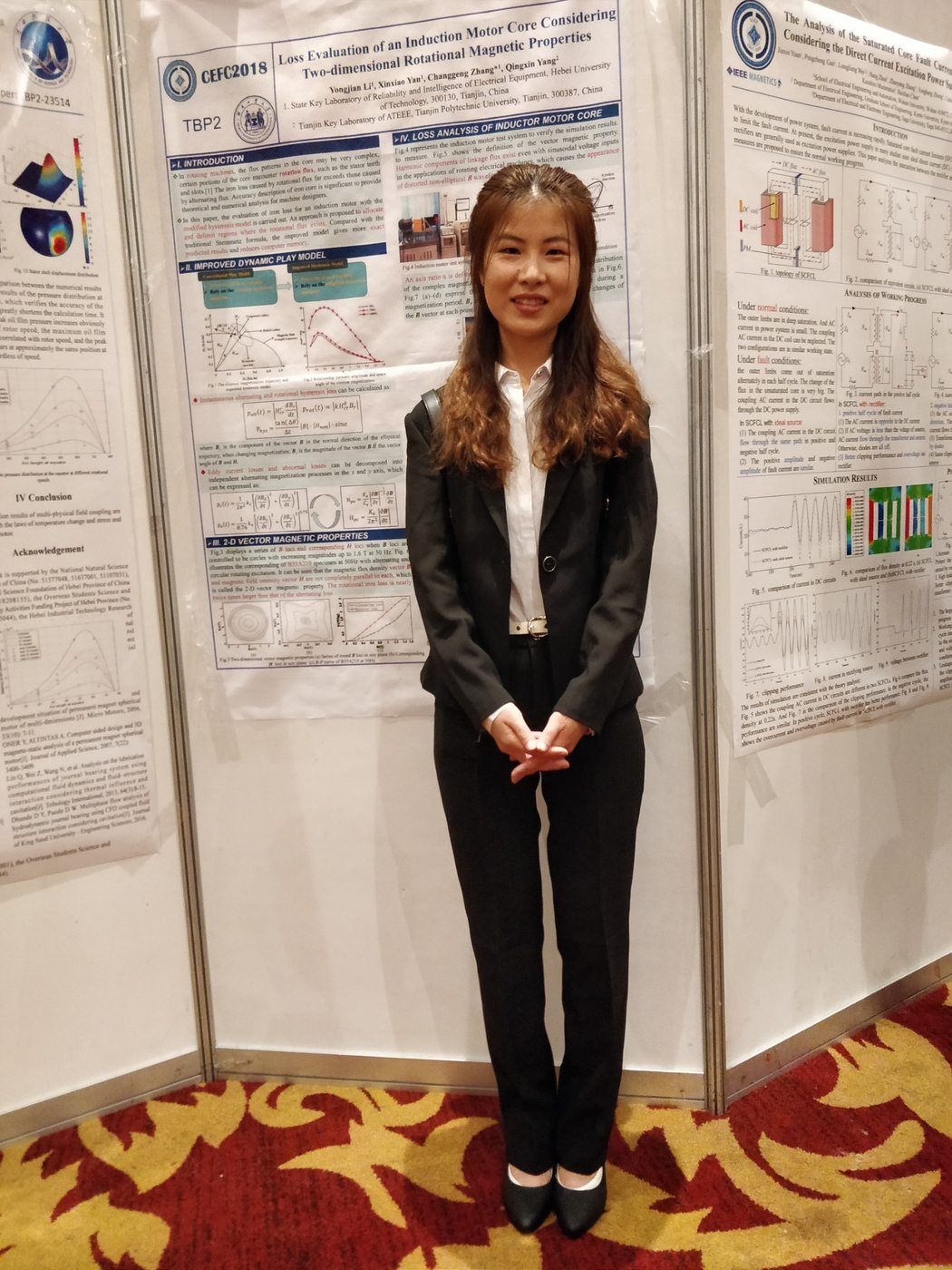
Flux weakening during rapid steering
At high speed, the voltage available from the inverter limits the response of a permanent-magnet synchronous motor. Zhang’s poster showed how the team combined feedforward current commands with feedback correction during flux weakening. Current waveforms recorded as the motor accelerated illustrated how its response differed from that of the conventional controller.
Tracing losses through the stator
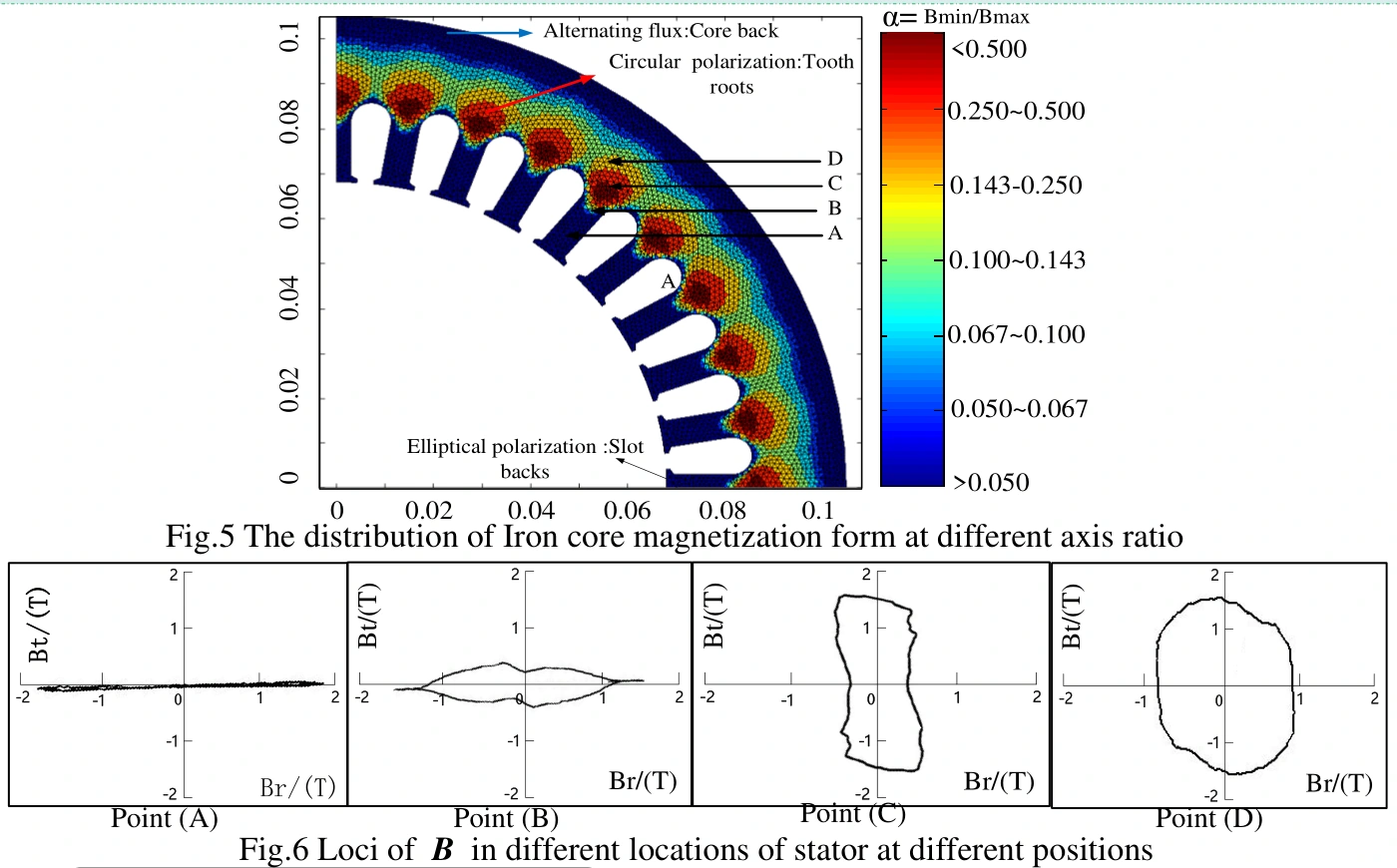
Yan traced the path of the magnetic flux density over one electrical cycle. At the root of a stator tooth, the vector could trace an almost circular path. In the stator back iron, it moved mainly back and forth along one direction. The team measured B35A210 non-oriented electrical steel at 50 Hz and used the ratio of the minor to major axes of the flux path to distinguish these local conditions. An improved dynamic Play hysteresis model then gave a spatial estimate of core loss.
CEFC comes to China
CEFC is a major biennial meeting on computational electromagnetics, covering field modelling, numerical methods and their application to device design. The Hangzhou meeting was the first in the series held in China. Chaired by Professor Shiyou Yang of Zhejiang University, it brought together more than 500 researchers and engineers from over 30 countries and regions. Zhejiang University conference report · IEEE Magnetics Society