Changgeng Zhang presents research on inductor core loss and permanent-magnet motor design at MMM 2019 in Las Vegas
-
date_range 08/11/2019 infosort Conferences labelMMMcore losselectric machines
Changgeng Zhang of Hebei University of Technology took part in two poster sessions at the 64th Annual Conference on Magnetism and Magnetic Materials (MMM 2019), held in Las Vegas, Nevada, on 4–8 November 2019. The studies addressed two design questions. The first examined how much energy a filter inductor dissipates when it carries a switching ripple superimposed on a DC current. The second explored how to account for temperature rise when choosing a permanent-magnet motor’s dimensions.
Core loss under square-wave voltage and DC bias
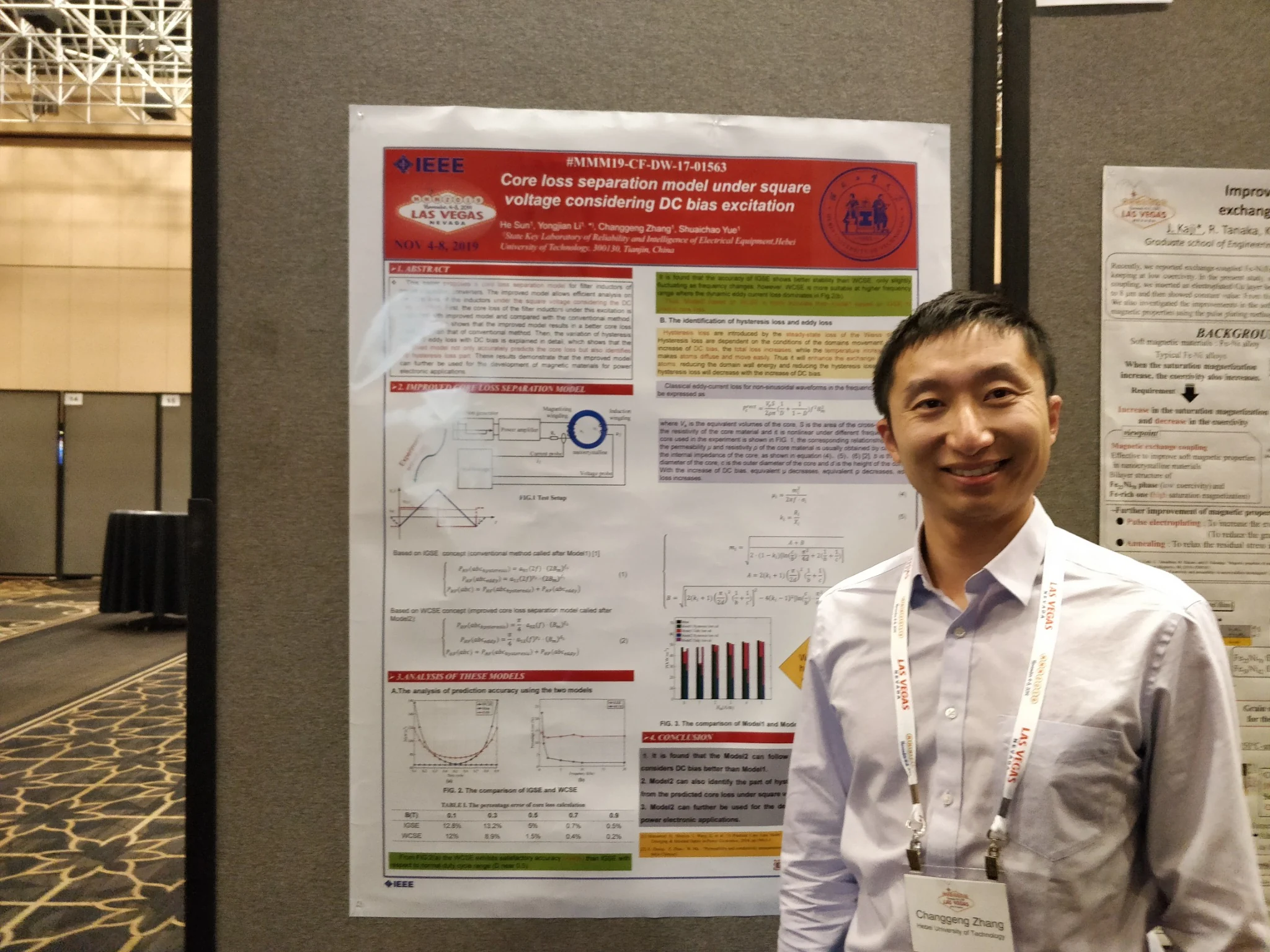
At the soft magnetic materials session on 6 November, poster DW-17 examined a filter inductor under conditions typical of a power converter. Switching changes the voltage across the inductor, while the DC component of the current shifts the core’s magnetic operating point. The researchers measured losses under square-wave voltage, compared the measurements with two models and examined how DC bias affected the hysteresis and eddy-current contributions. At the 0.5 T test point shown on the poster, the core-loss calculation error was 5% for the improved generalised Steinmetz equation (iGSE) and 1.5% for the waveform-coefficient method (WCSE).
Accounting for temperature rise in motor design
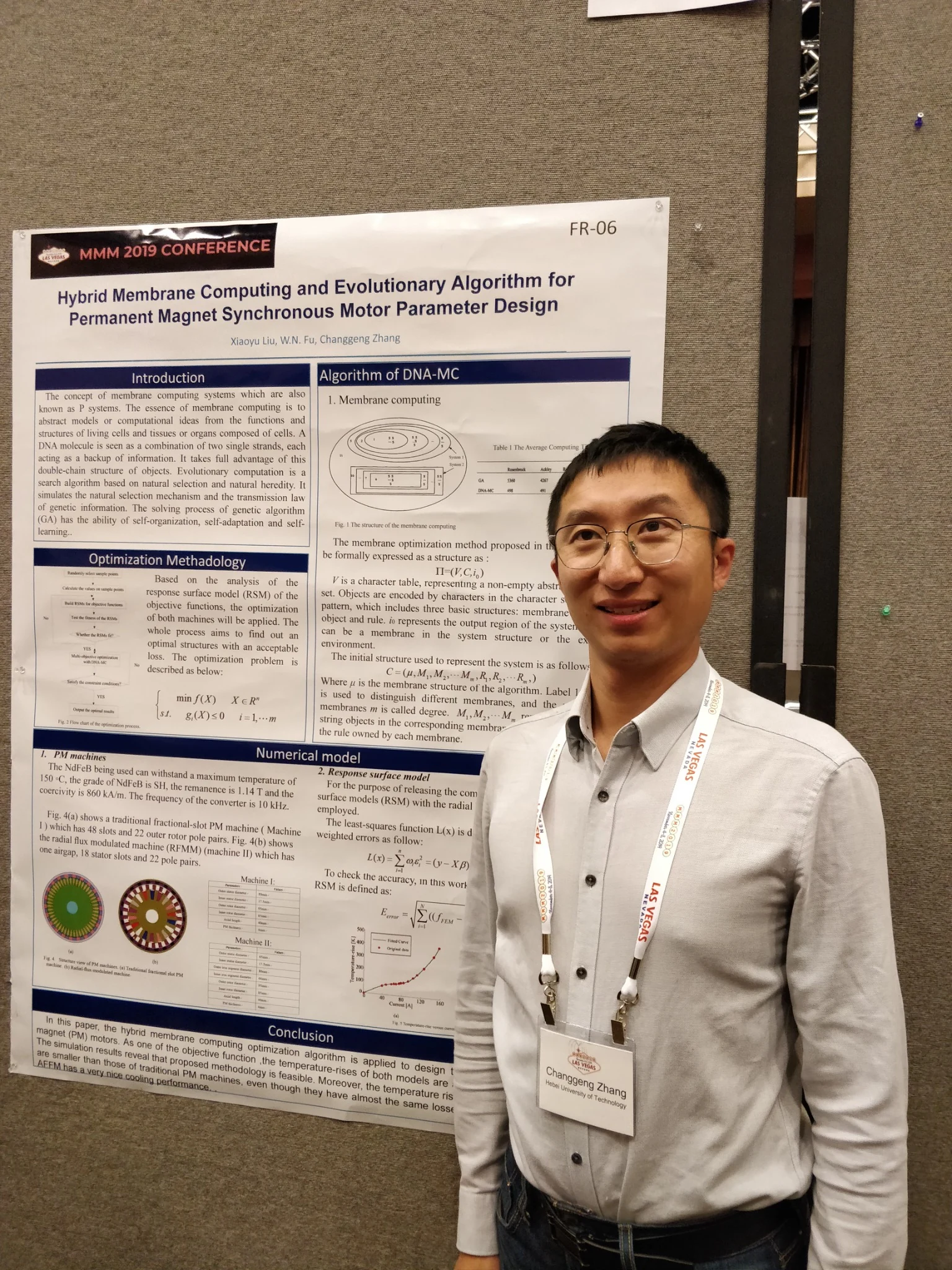
On 7 November, poster FR-06 in the motors and actuators session explored the use of membrane computing and an evolutionary algorithm to select permanent-magnet motor parameters. Both designs had 22 pole pairs. The conventional fractional-slot motor had 48 slots. The radial-flux-modulated motor had 18 stator slots. The researchers fitted a response surface to finite-element results and used it to search for designs that balanced loss and temperature rise within the specified constraints. The poster plotted calculated temperature rises against current alongside the fitted curve, showing how well the simpler model tracked heating as the current increased.
About the MMM Conference
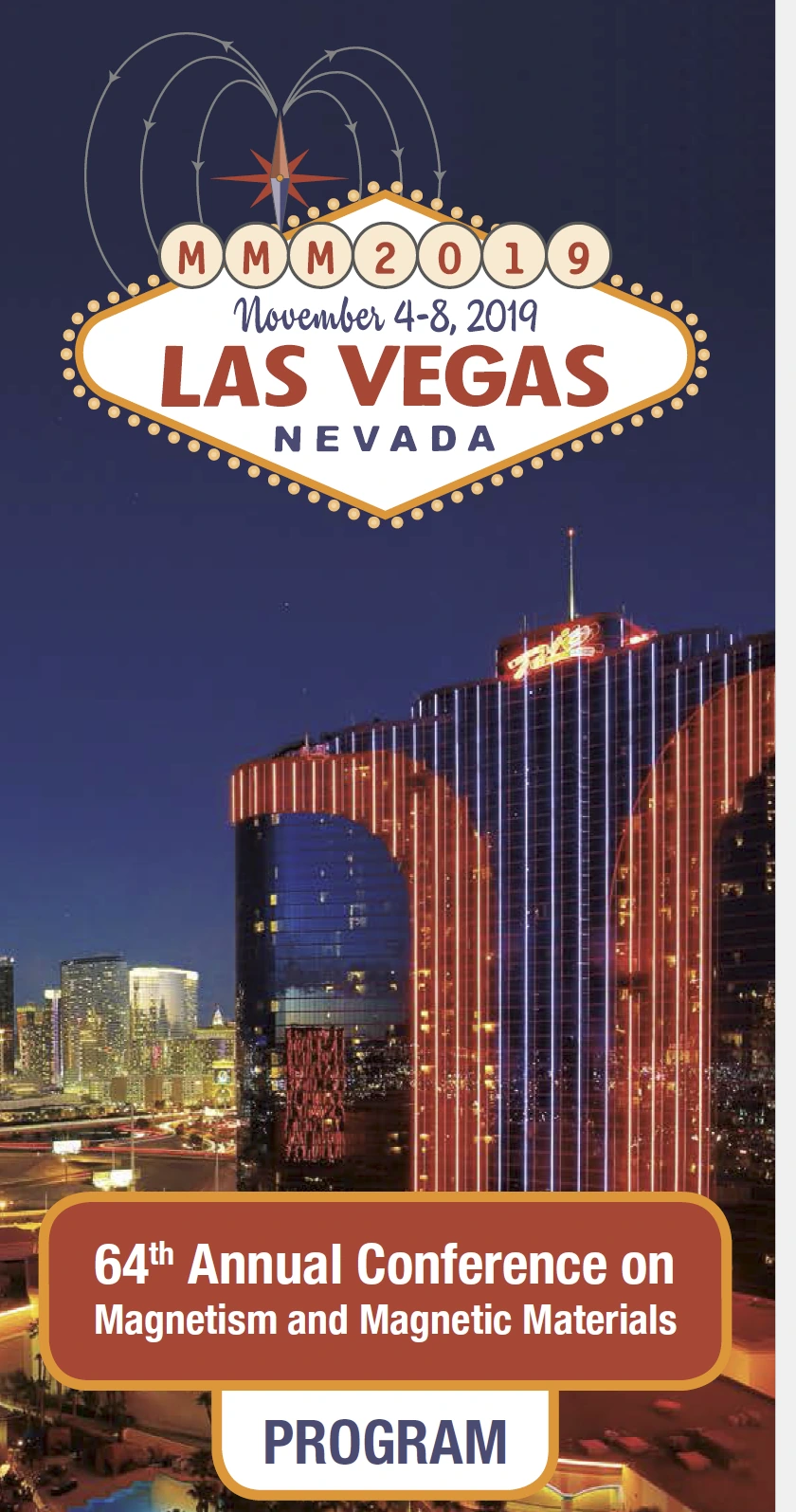
The annual MMM Conference brings together researchers in fundamental magnetism, magnetic materials and their applications. AIP Publishing and the IEEE Magnetics Society jointly sponsored the Las Vegas meeting in cooperation with the American Physical Society. Held at the Rio All-Suites Hotel & Casino, the conference scheduled about 1,800 talks and posters. Its eight invited symposia included sessions on two-dimensional magnets, machine learning in magnetism, and magnetic control and sensing in biomedicine. Conference programme