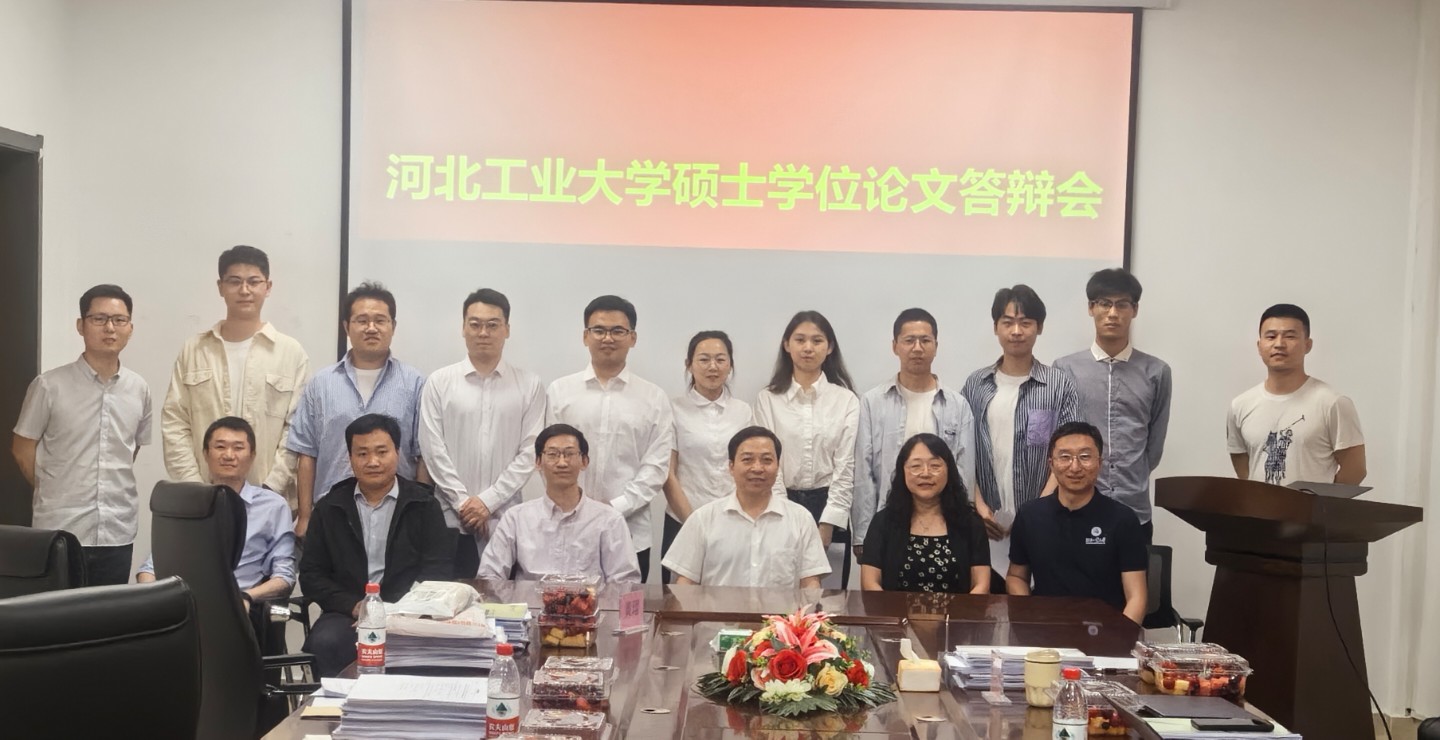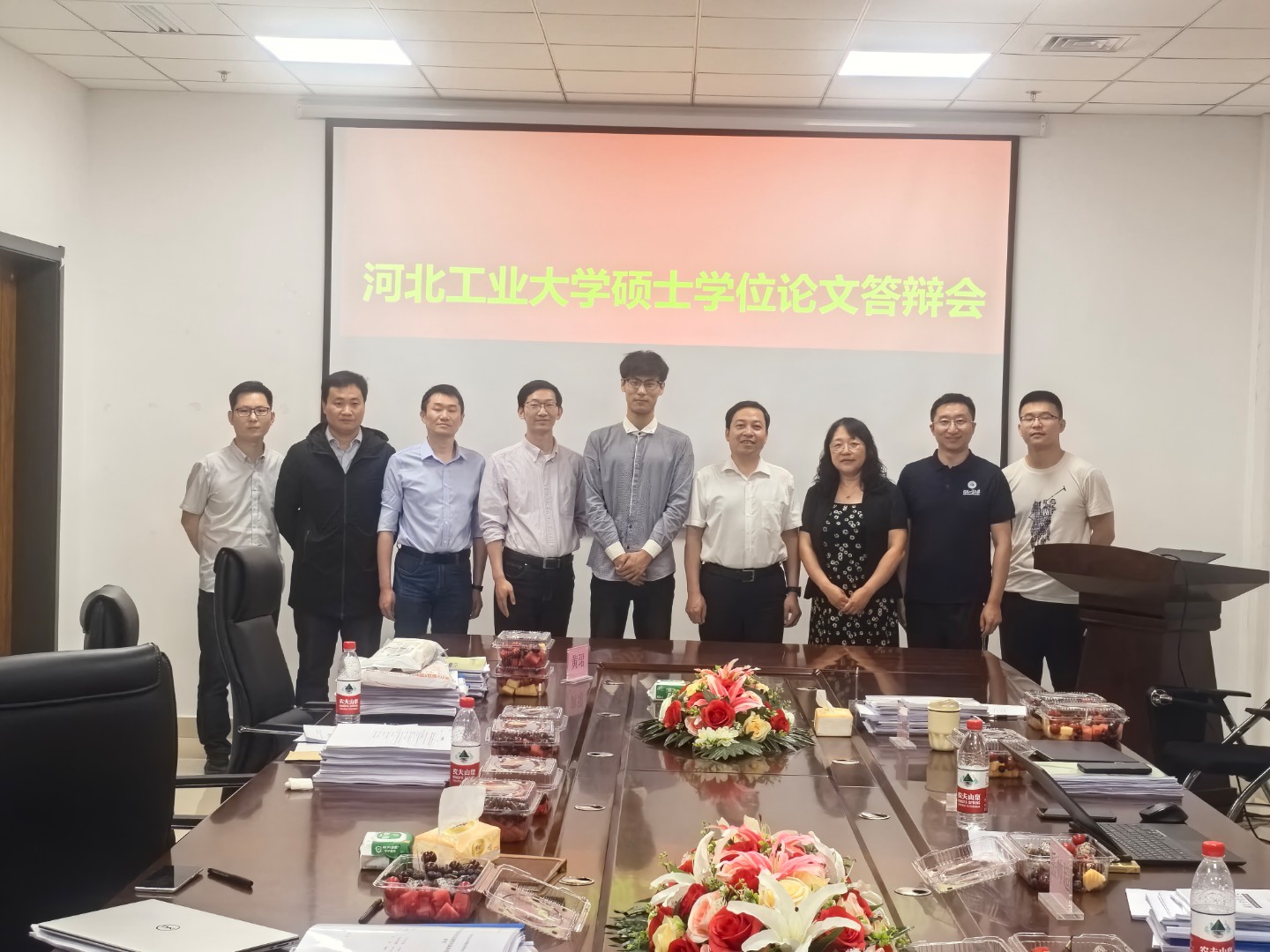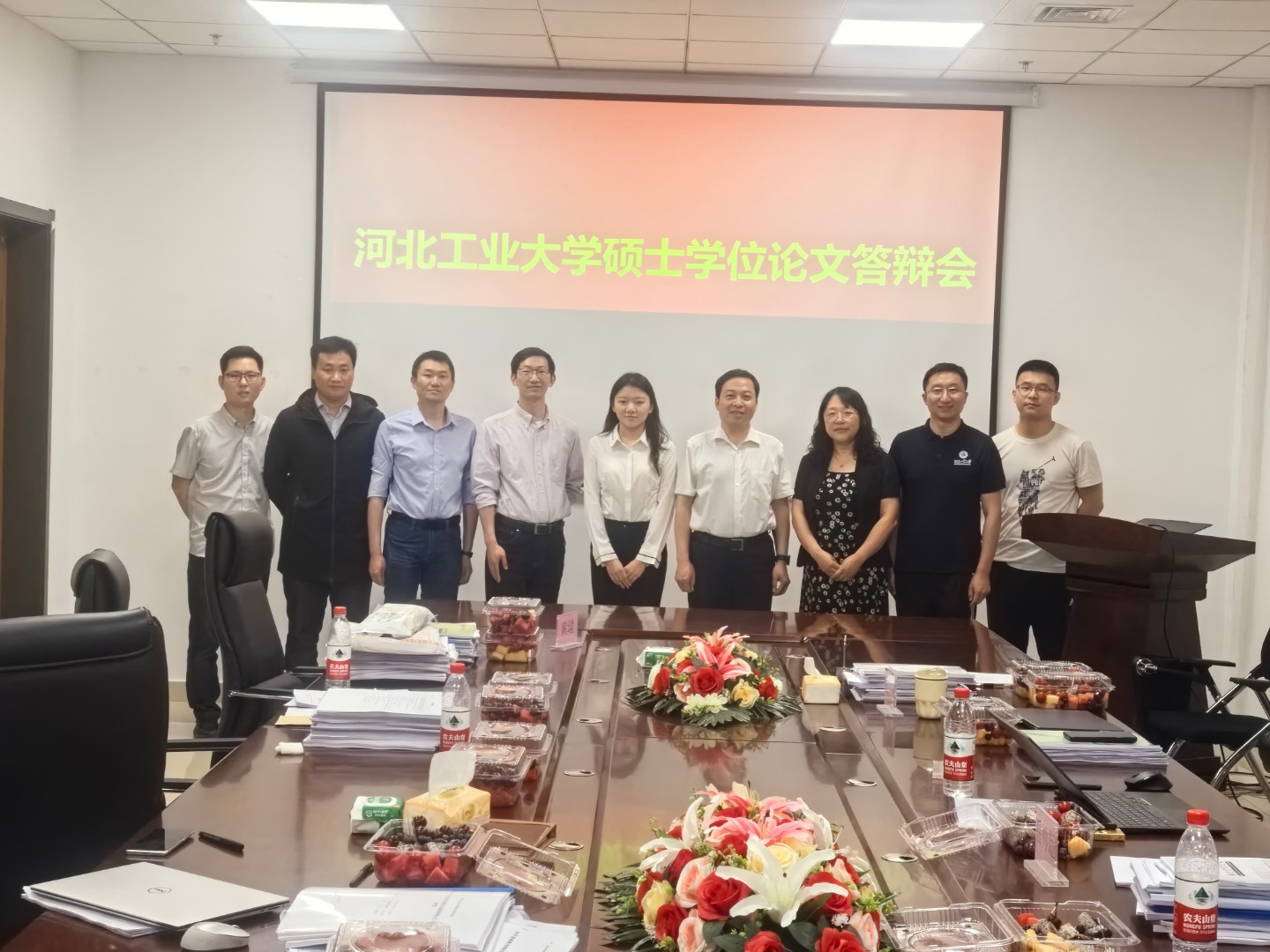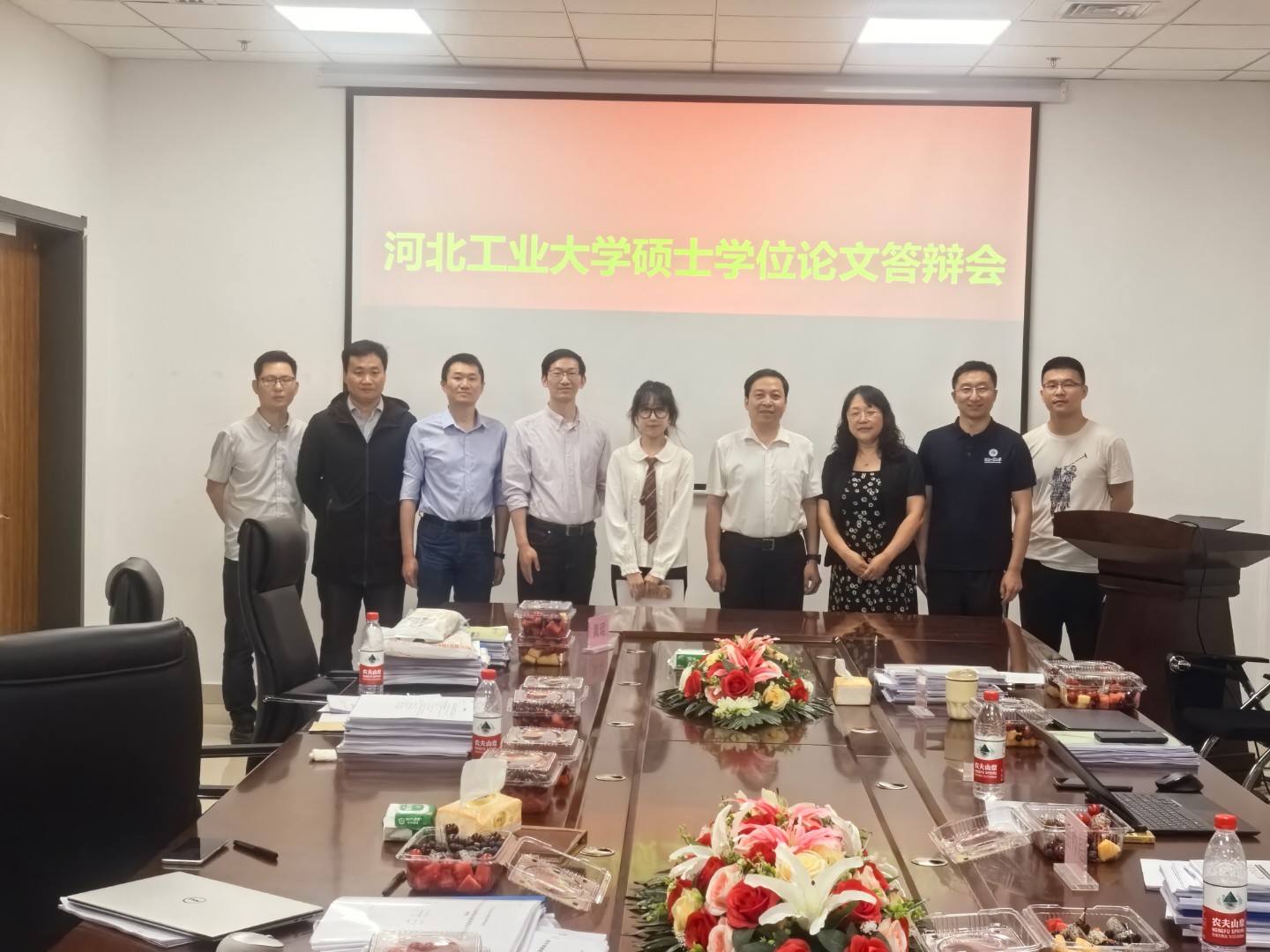
Four of Prof. Changgeng Zhang’s students defend their master’s theses
-
date_range 25/05/2024 infosort Graduations labeldefence
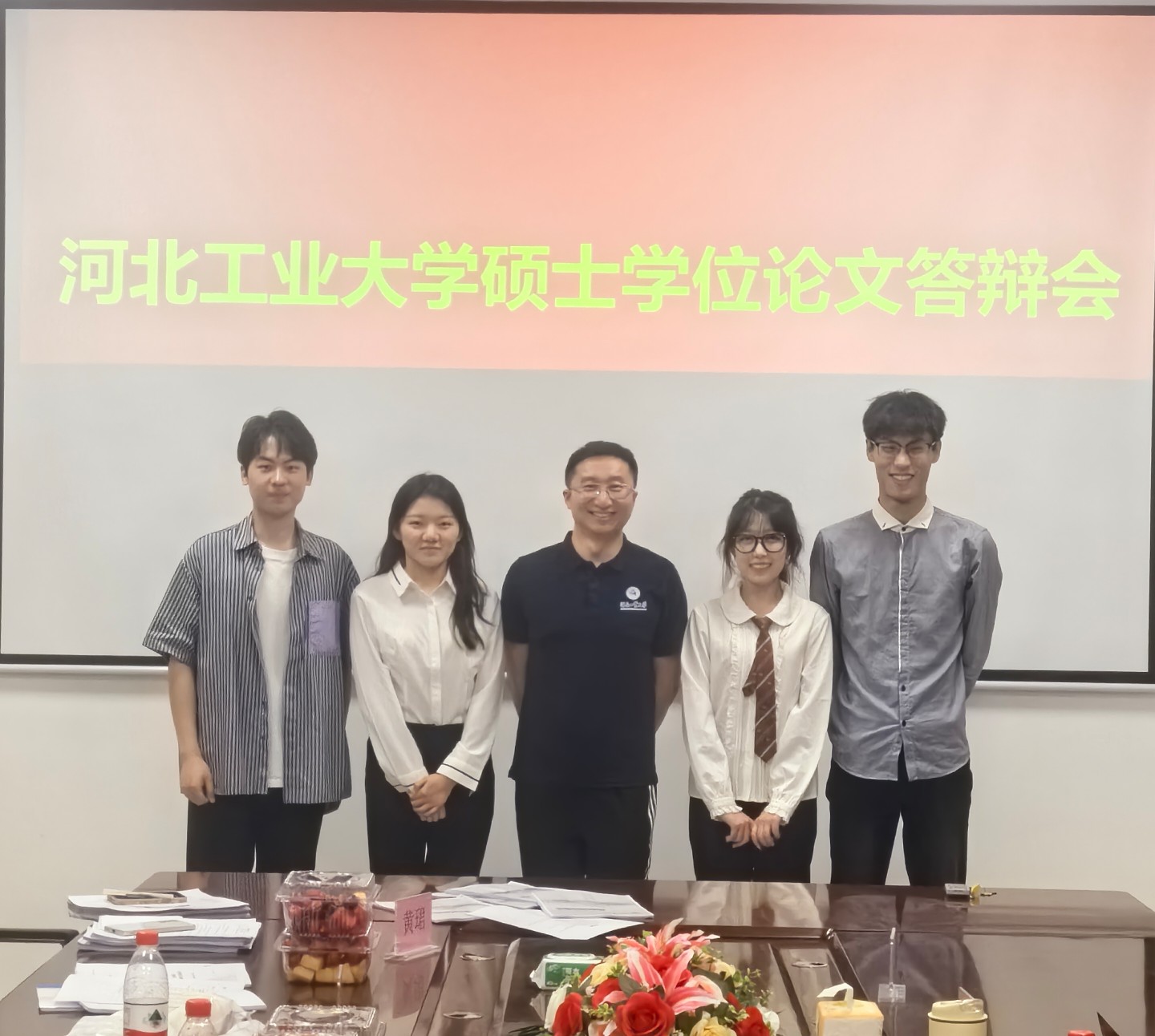
On 25 May 2024, Xizheng Li, Yan Zhang, Baichuan Yu and Shuyue Guan successfully defended their master’s theses at the School of Electrical Engineering, Hebei University of Technology. Supervised by Prof. Changgeng Zhang, the four students studied problems ranging from the edges of cut electrical steel sheets to the microscopic spots where current crosses a metal contact.
What happens to electrical steel when it is compressed or cut?
Xizheng Li designed a single-sheet tester that applies pressure perpendicular to the sheet, in the direction in which laminations are stacked. A feedback loop controlled the magnetic flux density so he could vary the pressure while holding the magnetic excitation constant. He tested four grades of electrical steel at different frequencies and pressures, and compared the effects of specimen orientation, sheet thickness and manufacturing process.
Yan Zhang measured how far magnetic degradation extends inward from a laser-cut edge. She moved a combined B–H probe across a sheet of 35WW250 non-oriented electrical steel to map the local changes. She compared grain structure, residual stress and magnetic domains at the edge and the centre, then used the variation in permeability with distance from the edge in a motor simulation.
How does current cross a contact?
Baichuan Yu studied what happens when two rough metal surfaces are pressed together. He modelled how their microscopic peaks deform under load and used finite element simulations to check the resulting change in real contact area. He then included the number of contact spots and the surface contamination film in a model of electrical contact resistance and tested its predictions against measurements.
Shuyue Guan investigated how current and heat are distributed across a high-speed sliding electrical contact. She also measured the magnetic field at the positions of electronic components and compared the recorded signals with her simulations.
The committee recommended academic master’s degrees in electrical engineering for Yan Zhang and Shuyue Guan, and professional master’s degrees in Energy and Power, specialising in electrical engineering, for Xizheng Li and Baichuan Yu.