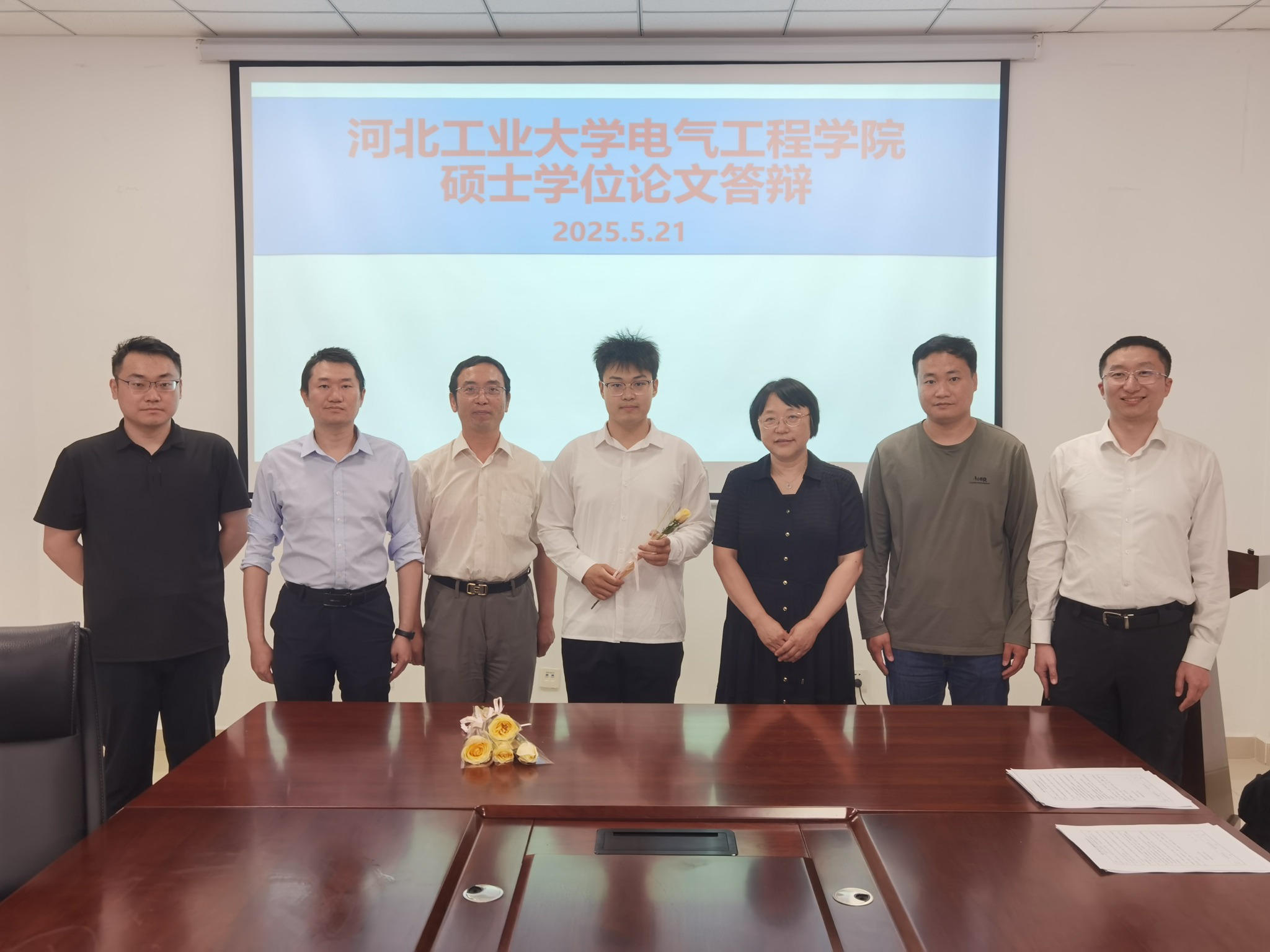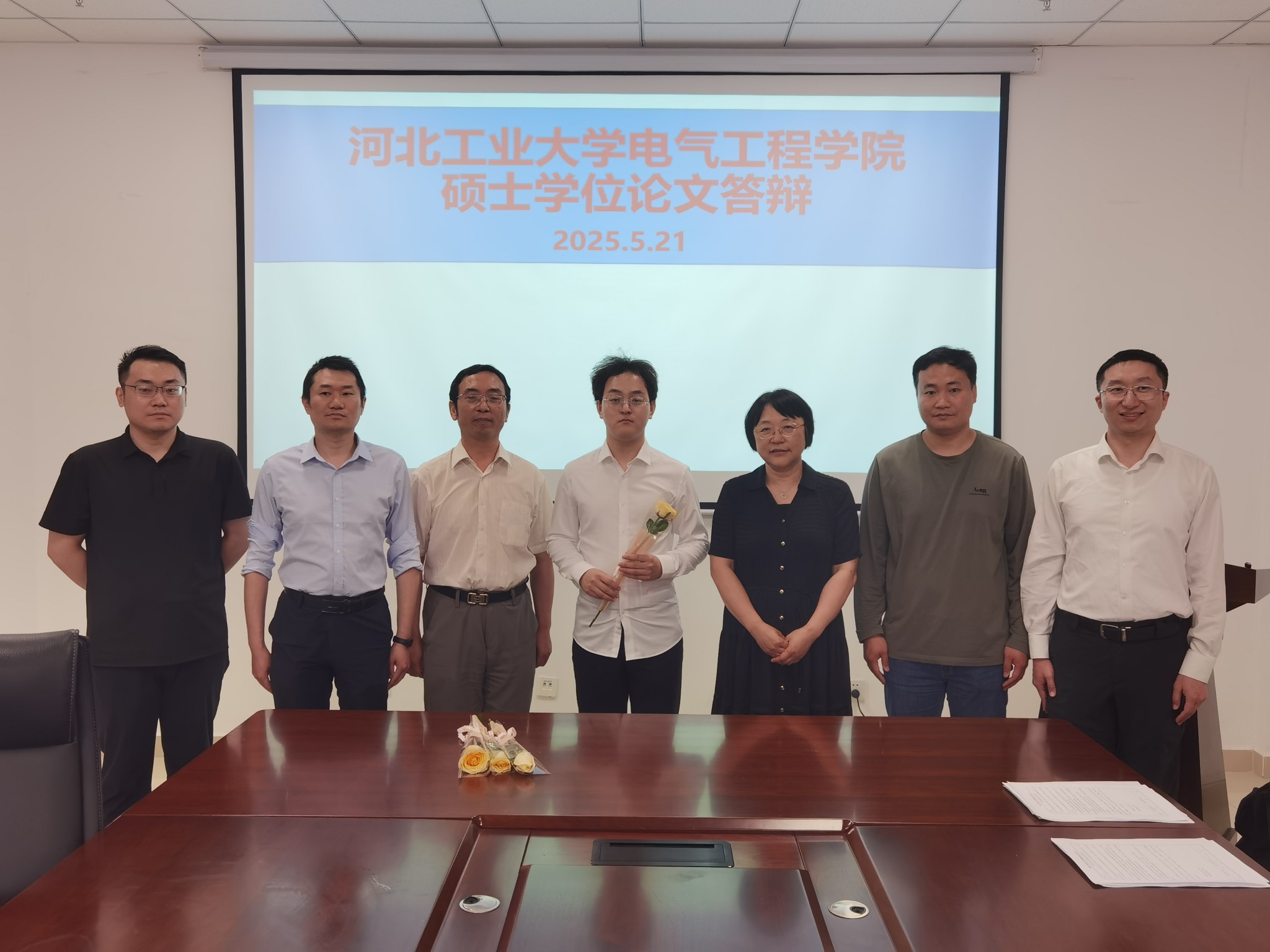
Prof. Changgeng Zhang’s students Haitao Zhang and Guochen Niu defend their master’s theses
-
date_range 21/05/2025 infosort Graduations labeldefence
On 21 May 2025, Haitao Zhang and Guochen Niu, both supervised by Prof. Changgeng Zhang, successfully defended their master’s theses at the School of Electrical Engineering, Hebei University of Technology. Haitao used laser vibrometry to record minute changes in the length of nanocrystalline laminations as the magnetic field cycled. Guochen applied pressure perpendicular to nanocrystalline and amorphous laminations and measured how their hysteresis loops and core losses changed under compression.
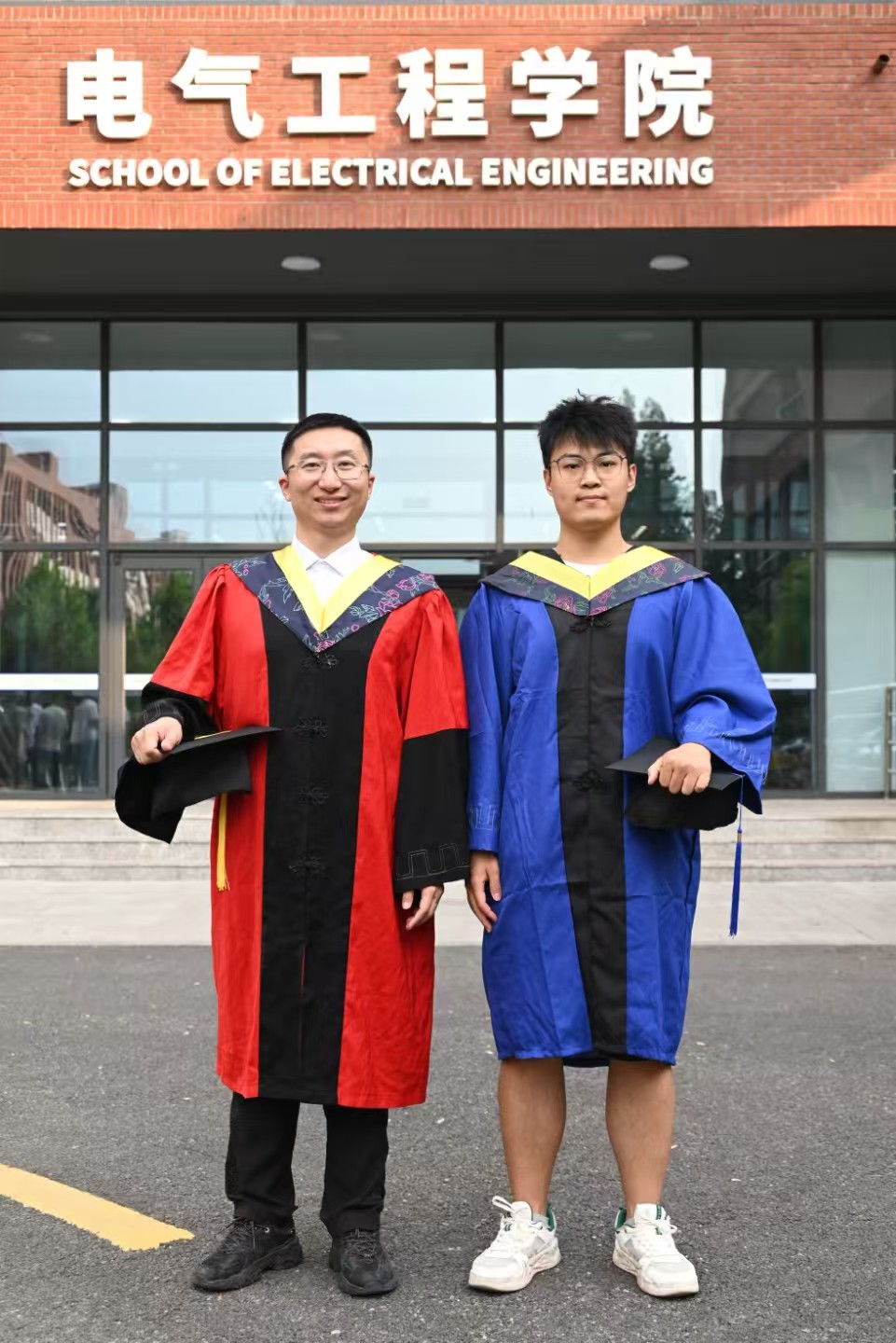
Haitao Zhang measures how a lamination changes length
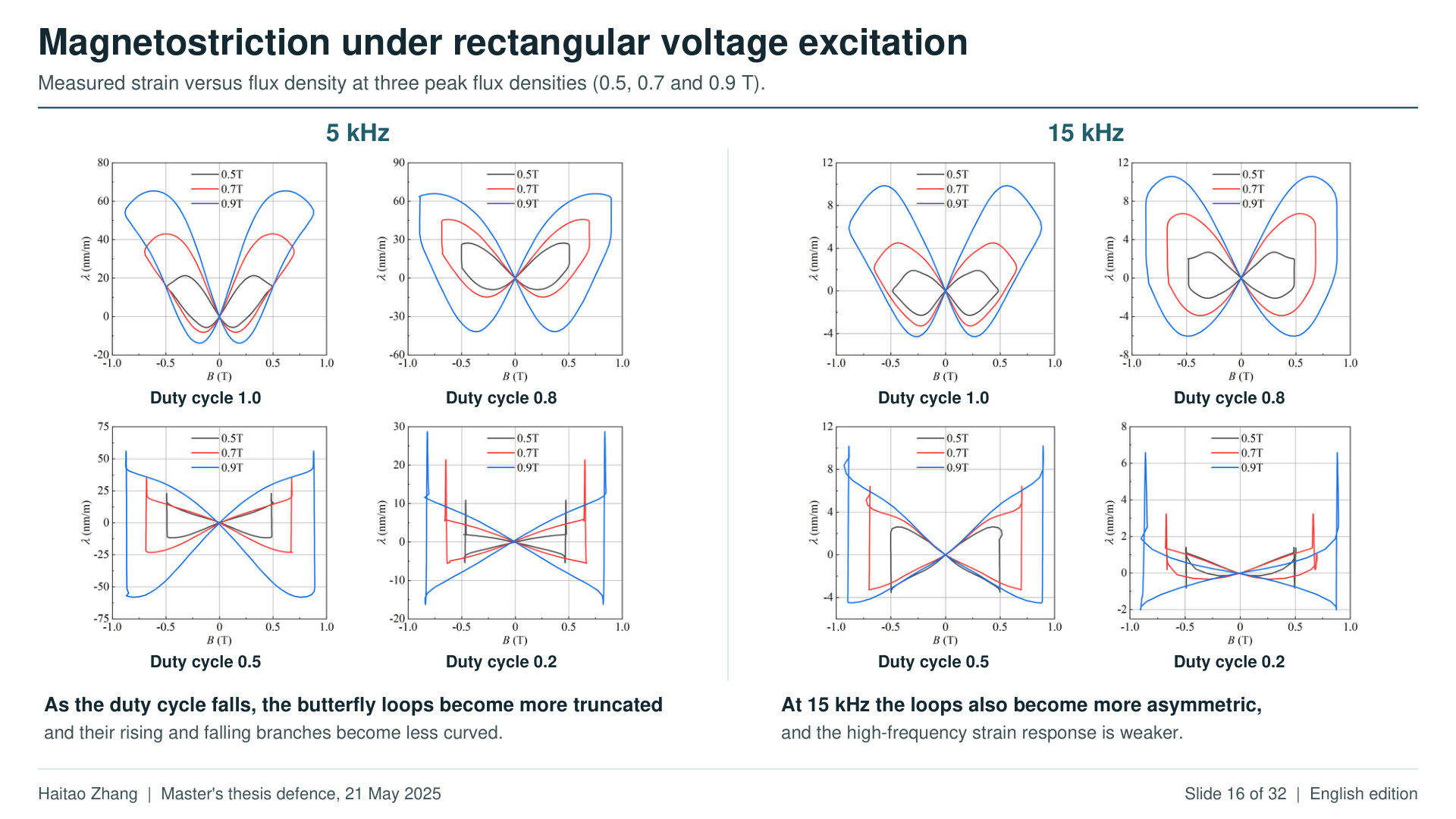
For his thesis on magnetostriction in nanocrystalline alloys, Haitao combined a double-yoke magnetic tester with an L-shaped optical path for laser vibrometry. The setup recorded magnetisation and strain at the same time. He tested the laminations under sinusoidal and rectangular excitation, as well as waveforms containing harmonics, and used a sequence-to-sequence model to predict strain over a cycle.
In tests at 5 and 15 kHz, Haitao progressively shortened the voltage pulse within each cycle. As the duty cycle fell from 1.0 to 0.2, the rounded wings of the butterfly-shaped strain loops became visibly truncated. The loops also showed greater asymmetry at 15 kHz. Read the related report on Haitao Zhang’s paper.
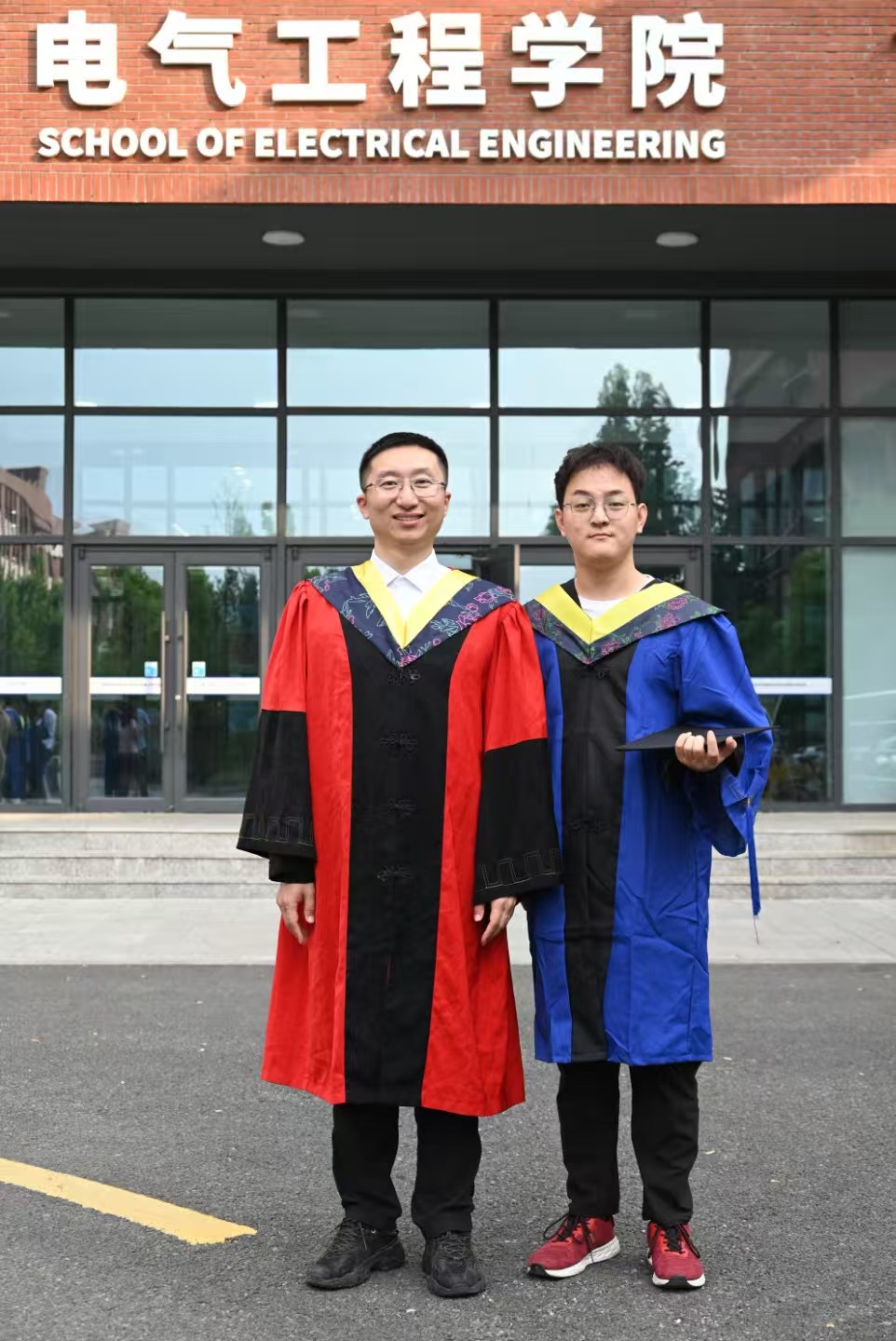
Guochen Niu measures how pressure changes core loss
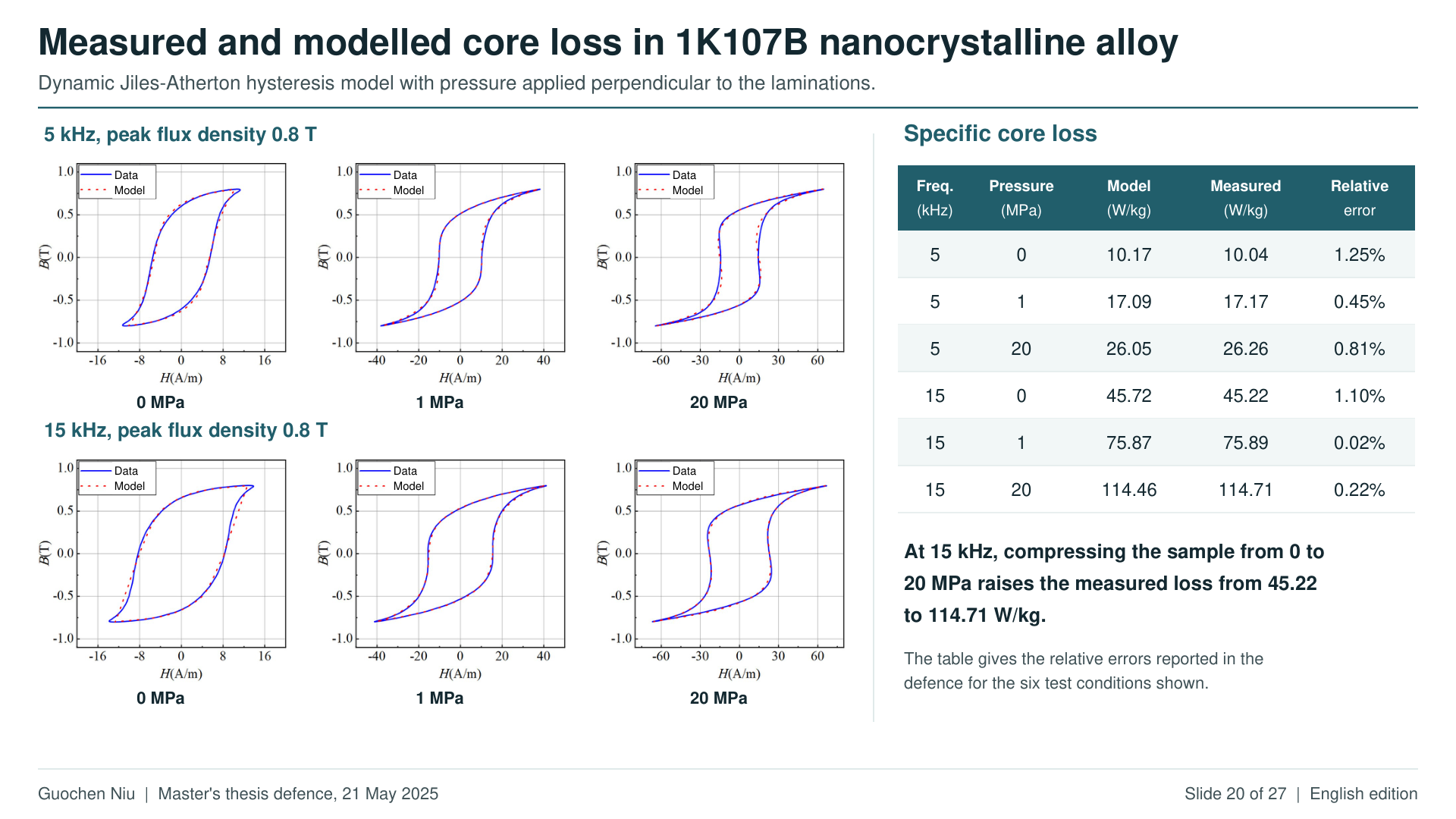
For his thesis on how stress affects nanocrystalline and amorphous alloys, Guochen modified a magnetic tester to apply pressure perpendicular to the laminations. He compared a nanocrystalline alloy (1K107B) with an amorphous alloy (1K101) over a range of frequencies and pressures. He incorporated this stress into a dynamic Jiles–Atherton hysteresis model and checked its predictions against measured hysteresis loops and core losses.
At a peak flux density of 0.8 T and a frequency of 15 kHz, the measured loss in the 1K107B sample rose from 45.22 W/kg with no applied pressure to 114.71 W/kg at 20 MPa. The model predicted 114.46 W/kg under load. With frequency and flux density held constant, compression alone more than doubled the loss in this sample. Read the related report on Guochen Niu’s paper.
The committee recommended both students for academic master’s degrees in electrical engineering.