
Prof. Changgeng Zhang gives two invited talks in Dalian on international approaches to teaching circuits and AI-assisted grading
-
date_range 03/08/2026 infosortActivitylabelAcademic conferencesTeaching
On 3 August 2026 in Dalian, Prof. Changgeng Zhang of Hebei University of Technology gave two invited talks at the 15th national meeting on university teaching and textbooks for circuits, signals and systems, and electromagnetics. Speaking on behalf of the university’s circuits teaching team, he delivered the presentation on international approaches to course design. In his other talk, he showed how instructors can use AI to grade handwritten circuit solutions. Zhang serves on the council of the national society for electromagnetics teaching and textbook research and has participated in the meeting for several years running.
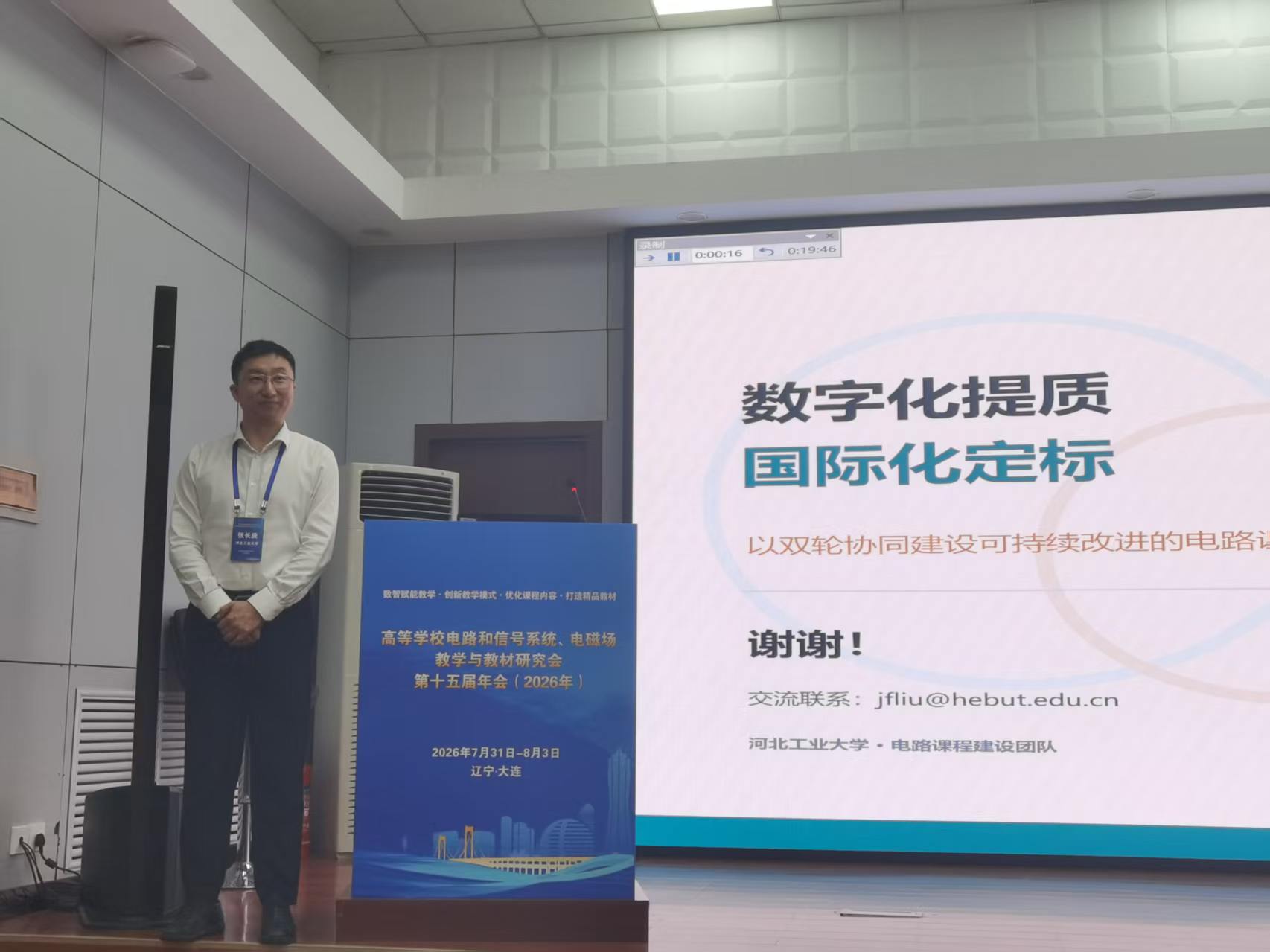
What a circuits course can learn from international practice
At the circuits forum, Zhang presented the team’s work on using digital tools and international benchmarks to develop its circuits course. The team uses international courses as a reference for what students should learn and how their work should be assessed. Digital assignments and feedback serve a different purpose. They show instructors where students run into difficulty and help them decide what to change the next time they teach the course.
Zhang has returned to this question at successive meetings. In Hohhot in 2024, he drew on his experience teaching in Tianjin and Finland to compare the roles of textbooks, laboratory work and programming exercises in electromagnetics courses. Read about the Hohhot talk
How to grade different solutions to the same circuit problem
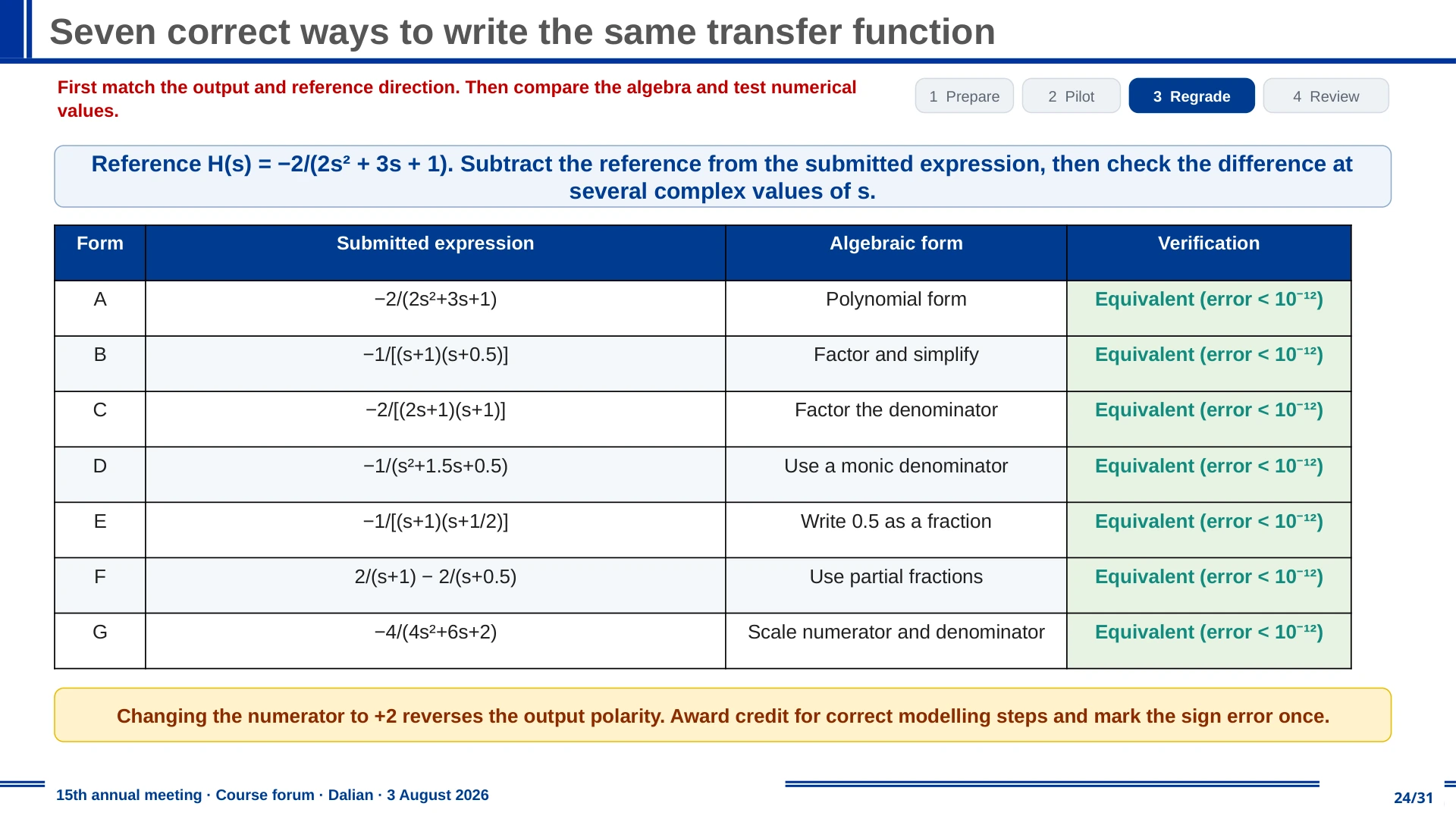
In Grading Circuit Homework with AI and Instructor Review, Zhang used a transfer-function problem to show why a grader needs to follow a student’s reasoning. The expressions −2/(2s² + 3s + 1) and −2/[(2s + 1)(s + 1)] describe the same function. He showed seven correct forms. After identifying the output and its reference direction, the system simplifies the expressions algebraically and checks their values at several sample points. A student who models the circuit correctly but reverses the output polarity retains credit for the correct steps.
The grading process starts with a pilot batch of ten submissions. The instructor checks whether the rubric covers valid approaches, revises it and approves the version used to regrade the whole class. When handwriting is unclear or a reference direction is ambiguous, the instructor receives the original image and the specific point that needs review.
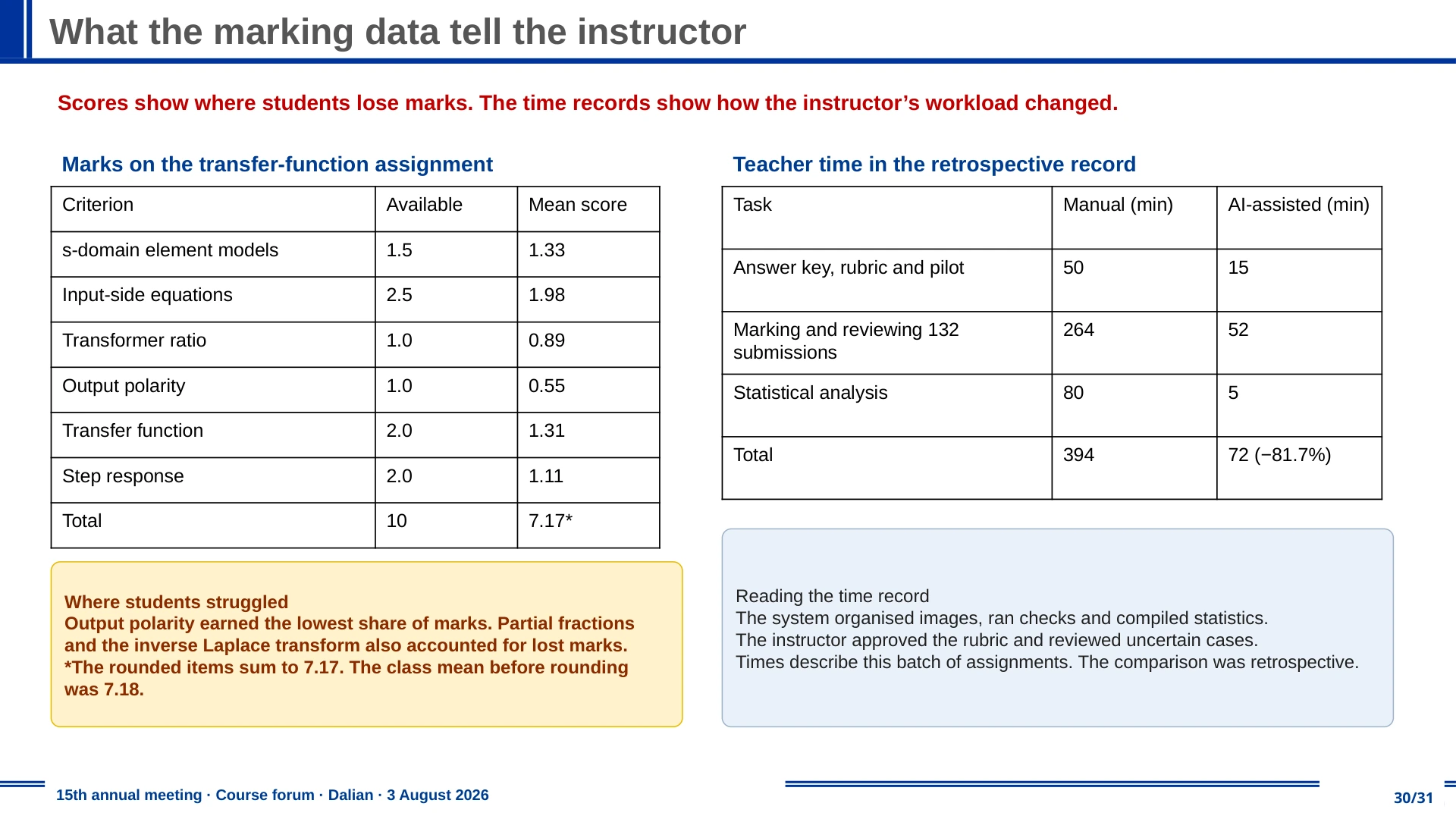
Zhang also presented a retrospective record of teacher time for 132 submissions. Across preparation, pilot grading, marking, review and analysis, the recorded totals were 394 minutes for manual grading and 72 minutes with AI assistance, an 81.7% reduction for this batch. Scores on individual criteria also pointed to topics worth revisiting. Students averaged just 0.55 out of 1 for output polarity on the transfer-function assignment, giving the instructor a reason to return to reference directions in class.
About the meeting
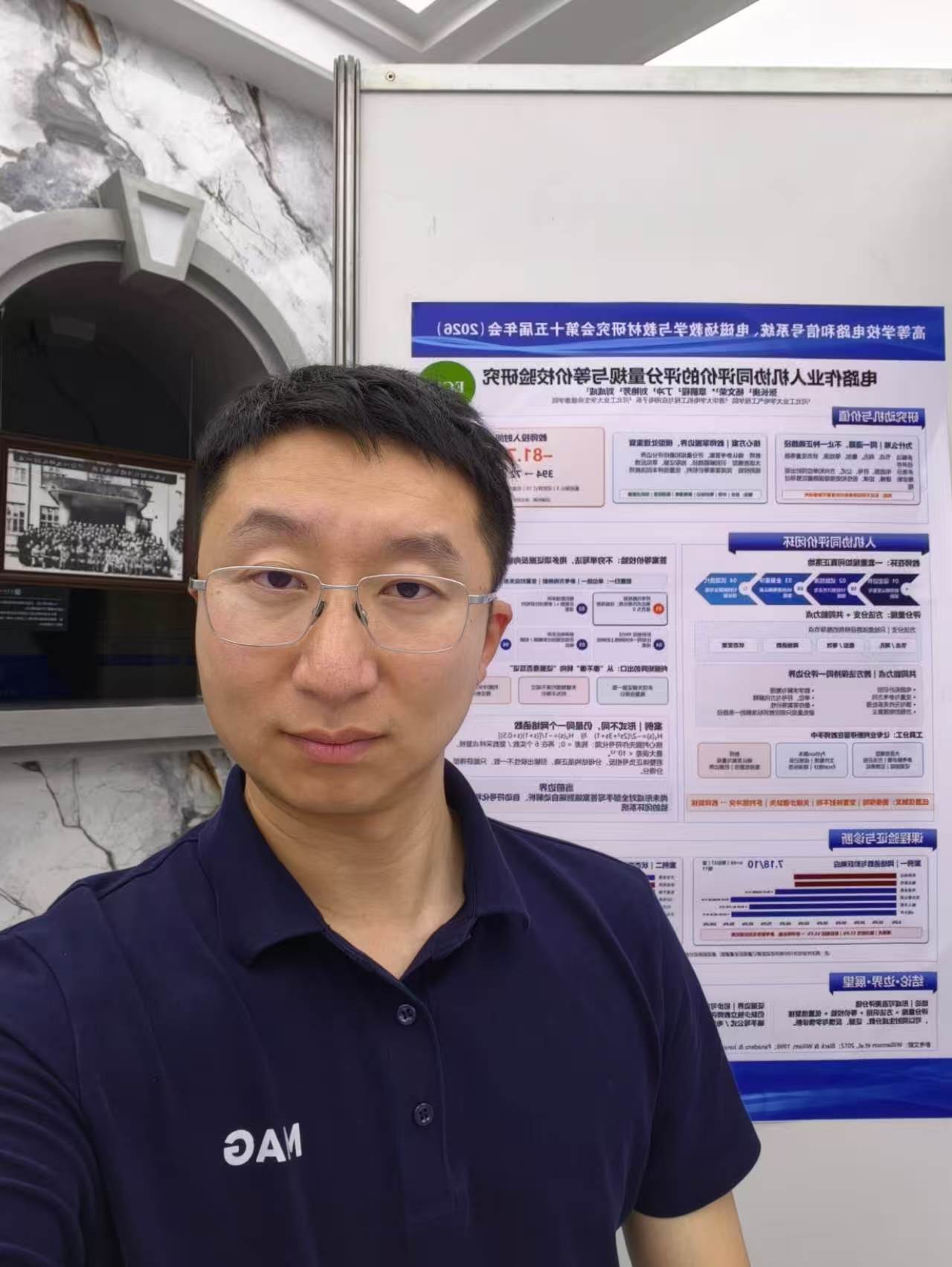
Dalian University of Technology hosted the meeting from 31 July to 3 August 2026. Nearly 300 delegates from 121 universities took part. The two teaching and textbook research societies jointly organised the meeting with the China Education Society of Electronics and Higher Education Press. The university’s School of Electrical Engineering hosted separate course forums for circuits, signals and systems, and electromagnetics. The programme also included a roundtable on AI in teaching, a poster session and the finals of the seventh national teaching competition for early-career faculty in these subjects. Meeting report from Dalian University of Technology (in Chinese)