Four students in Prof. Changgeng Zhang’s group successfully defend their master’s theses
-
date_range 21/05/2026 infosort Graduations labelGraduate education
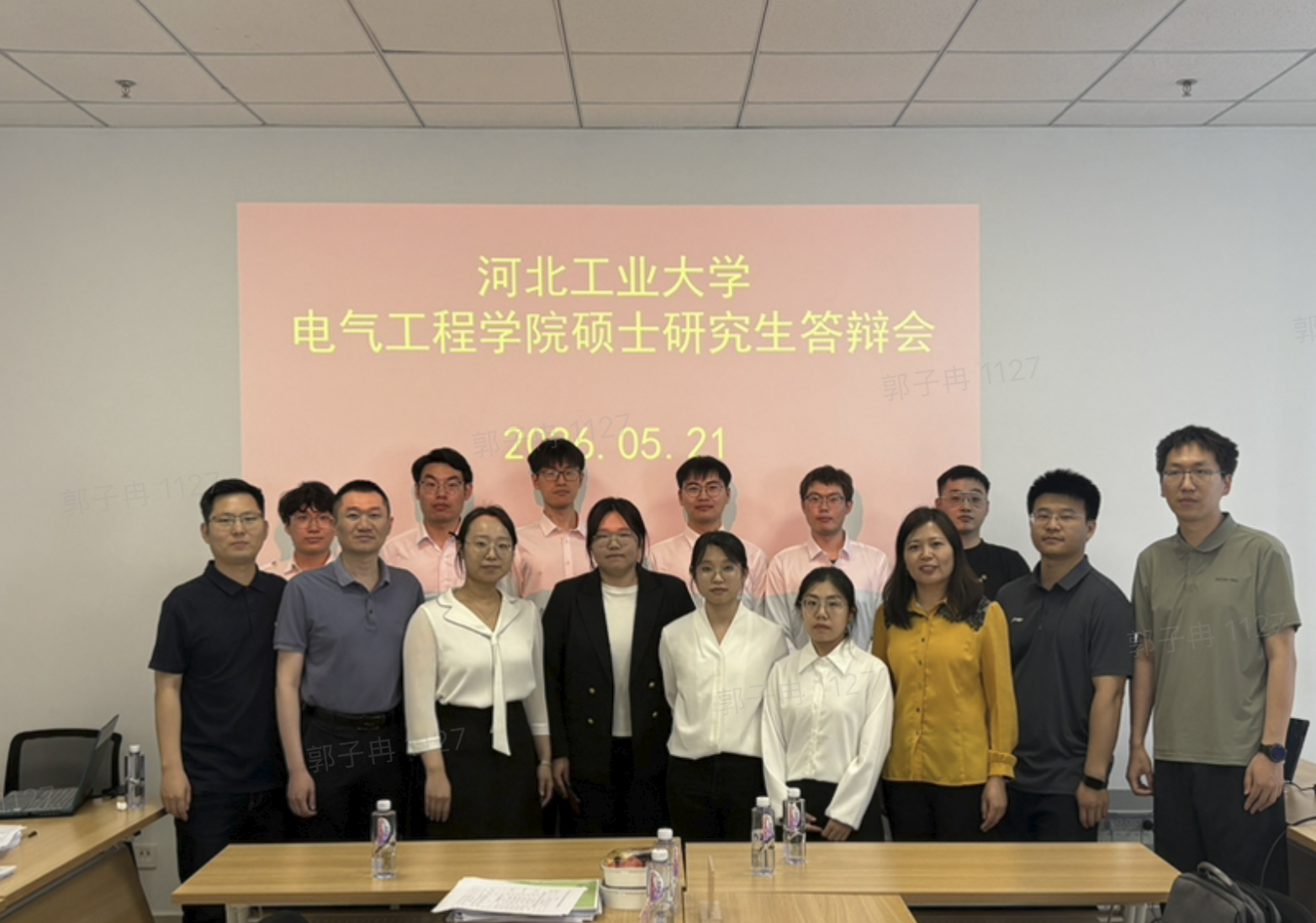
On 21 May 2026, Ziran Guo, Guotao Sun, Kai Wang and Xiaoxiao Liu successfully defended their master’s theses at the School of Electrical Engineering, Hebei University of Technology. Prof. Changgeng Zhang supervised all four students. Their experiments ranged in scale from the coating on a single powder particle to vibrations measured on a transformer.
What powder surfaces and magnetic domains reveal
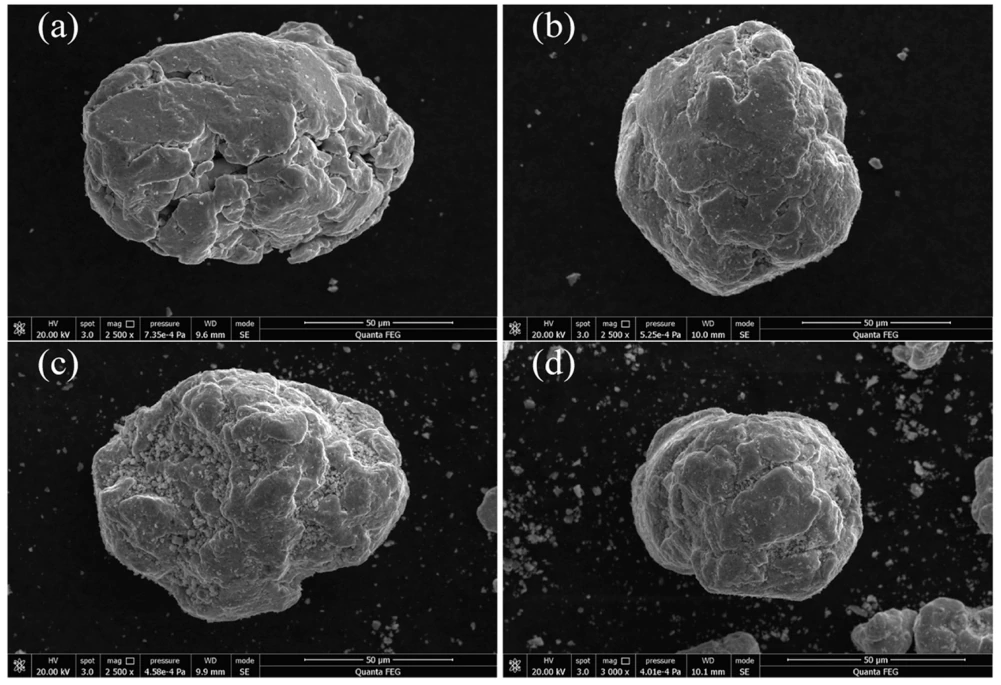
Ziran Guo coated iron powder with nickel–zinc ferrite and consolidated it into magnetic cores by low-pressure spark plasma sintering. He used scanning electron microscopy to examine the coatings and compared the conductivity, permeability and loss of cores with different ferrite contents. Of the four compositions in the team’s published study, 2.5 wt% ferrite gave the best overall magnetic performance over 20–200 kHz. His thesis also incorporated the demagnetising effect of the particles into a hysteresis model for the cores.
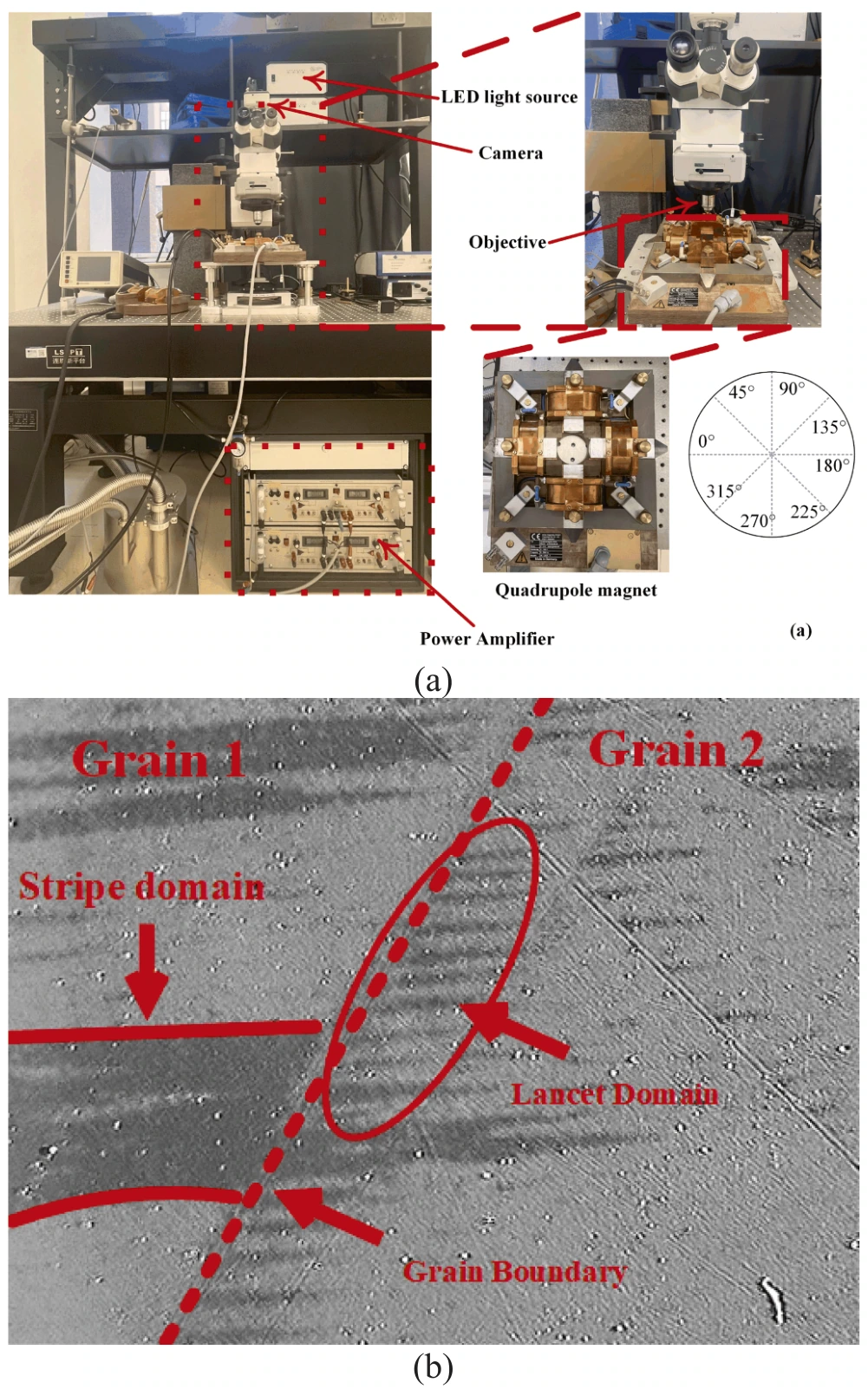
Guotao Sun studied how magnetic domains in grain-oriented electrical steel change shape as an applied field rotates. He used a magneto-optical Kerr microscope to track the same region of the sheet, extracted features describing the domain shapes, and compared them with the magnetisation of the sheet as a whole. The images revealed how domain walls moved and supplied data for predicting the material’s response to a rotating field.
Reading the condition of equipment from vibration
Kai Wang recorded vibrations on a dry-type transformer test rig to see whether the signals could identify which phase of the core had a loose upper-yoke bolt. Working with a limited number of fault samples, he compared sensor locations and tested methods for detecting core looseness and winding faults.
Xiaoxiao Liu studied electrical contact and structural vibration.